English
Views: 0 Author: Site Editor Publish Time: 2026-08-14 Origin: Site


Contractors often face a hidden operational friction on the job site when managing versatile machinery fleets. Equipment designed primarily for coarse concrete aggregate frequently struggles to handle the sticky, high-shear requirements of masonry mortar. We wrote this comprehensive guide to evaluate if the baseline PCM5-HS concrete mixer can manage heavy commercial mortar mixing efficiently. You will learn exactly what specification adjustments you need and how to mitigate daily operational risks before initiating procurement.
We operate from a strictly skeptical, evidence-based baseline. No single mixer design is perfectly optimized for both materials without specific operational compromises or necessary aftermarket modifications. Our analysis cuts through standard marketing noise. We focus strictly on the physical realities of combining heavy sand, lime, and cement inside a tilted rotary drum to protect your project yields.
Mortar lacks the coarse aggregate needed to "scour" standard concrete mixer drums, requiring specific blade configurations to prevent dead zones.
Baseline PCM5-HS concrete mixer specifications (like motor RPM and torque) dictate whether the unit will stall under the continuous drag of wet mortar.
Procuring a custom PCM5-HS concrete mixer with specialized paddles or variable speed control often yields better long-term ROI than standard off-the-shelf units.
Selecting a reliable PCM5-HS concrete mixer supplier hinges on replacement part availability and verified warranty support for high-friction use cases.
Using the wrong drum dynamics leads directly to unmixed pockets and wasted raw material. You also face dramatically increased labor costs for manual correction. When a crew has to stop operations and manually chop dry pockets at the drum base with a trowel, you lose valuable production time. This business problem scales negatively as site volumes increase.
Concrete and mortar possess fundamentally different mixing physics at a granular level. Concrete relies heavily on gravel and coarse aggregates. These hard stones act as internal grinding agents during the rotation cycle. They scour the drum walls continuously and break up cement clumps naturally. Mortar completely lacks these coarse aggregates. It requires dedicated mechanical shear force to fold fine sand, cement, lime, and water together without clumping. The material is inherently sticky, highly cohesive, and drags heavily against internal steel surfaces.
A successful mortar mix inside a rotary drum demands three strict operational criteria:
Continuous material folding without aggregate separation or banding.
Zero dry-pocket accumulation at the very bottom of the tilted drum.
Consistent, uniform batch-to-batch yield regardless of operator fatigue or weather conditions.
If the equipment fails these criteria, structural integrity suffers rapidly. You simply cannot risk weak adhesion bonds in structural masonry applications.
Evaluating the exact PCM5-HS concrete mixer specifications is crucial for ensuring mortar success. Mortar creates a continuous, uniform drag on the electric motor. Concrete tends to tumble loosely; mortar pulls constantly. This constant friction demands exceptional electrical resilience from the power plant.
You must assess if the standard pure-copper motor can handle sustained low-speed friction. Always check for certified ETL/UL compliance ratings to ensure the motor resists thermal overload during grueling summer shifts. Motors lacking pure copper windings will quickly overheat and stall under heavy mortar loads.
Drum geometry also requires transparent assumptions regarding true capacity. A 5.0 cubic foot drum does not yield 5.0 cubic feet of mixed mortar. You must account for the steep tilt angle and material swell during hydration. A realistic workable yield sits strictly between 50% and 60% of the total physical volume. Pushing past this limit causes immediate over-spilling and severe motor strain.
Rotational speeds heavily influence final mix quality. Factory RPMs tuned for gravel flow might prove far too aggressive for mortar. High rotational speeds pin sticky mortar to the outer walls via centrifugal force, rendering the mixing blades useless. Conversely, speeds that are too slow fail to fold the heavy, cohesive mix effectively.
Performance Metric | Concrete Requirement | Mortar Requirement |
|---|---|---|
Motor Torque Demand | Variable (peaks heavily during initial loading) | Continuous, sustained high drag |
Optimal Drum RPM | Moderate to High (typically 25-30 RPM) | Lower, focused strictly on folding (20-25 RPM) |
Drum Scouring Action | Passive (gravel actively cleans the drum interior) | Active (requires specialized, tightly fitted blades) |
Max Yield Efficiency | Approx. 60-70% of total rated volume | Strictly limited to 50-60% max volume |
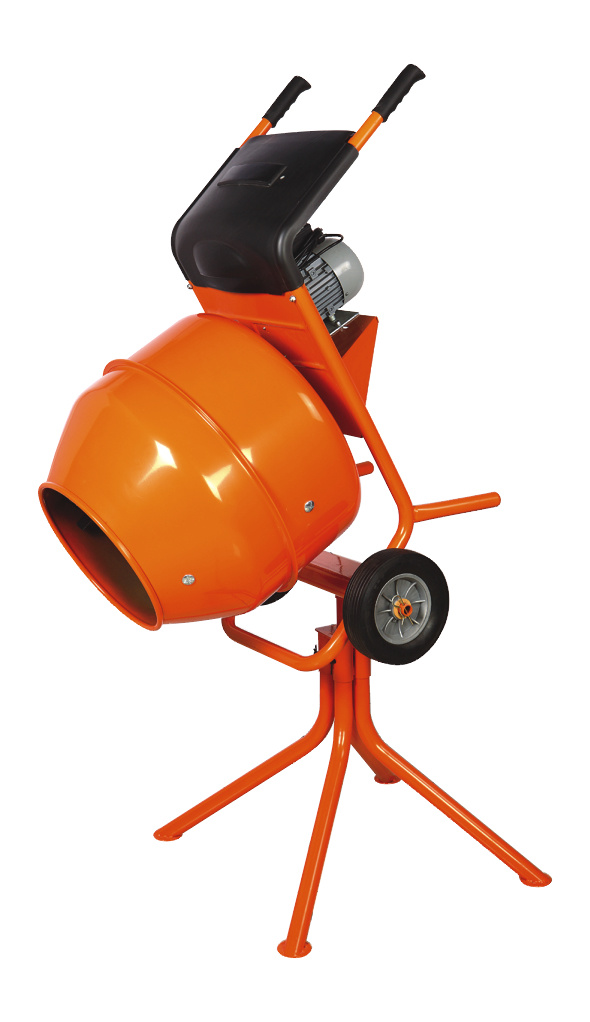
Standard mixer setups utilize fixed, low-profile internal blades. Manufacturers design these specific profiles for unobstructed gravel flow. When cohesive mortar hits these standard blades, the material often sticks and bridges across the physical gaps. This bridging creates massive unmixed lumps that ruin masonry joints.
Upgrading directly to a custom PCM5-HS concrete mixer configuration solves this problem through specialized paddle architectures. Custom builds often feature durable polyurethane or heavy-rubber-tipped wiper blades. These robust, flexible edges physically scrape the steel drum interior during every single rotation. They entirely prevent the dreaded mortar build-up that otherwise shrinks your functional mixing volume over time.
Drive mechanisms also dictate daily job site reliability.
Belt-driven systems: These offer inexpensive replacement parts and inherently protect the motor from sudden mechanical jams. However, heavy mortar loads frequently cause them to slip if tension is not perfectly maintained by the operator.
Direct gear drives: These provide exceptional, zero-slip power transfer. They push through dense, wet mortar effortlessly. However, they cost significantly more to repair if a hard rock jams the paddles and strips the internal gears.
When should you actually customize? We use a simple logic framework based on expected operational volume. Occasional users performing minor patchwork can survive with standard metal blades. High-frequency masonry crews should immediately default to a custom build. Retrofitting standard units later usually costs much more in production downtime and labor than simply ordering the correct paddles upfront.
Deploying a mortar mixing PCM5-HS concrete mixer setup carries several specific field risks. The "dead zone" risk remains the most common obstacle for new operators. Dry sand and cement love to pack tightly into the very bottom corner of a tilted drum. Liquid struggles to penetrate this dense, compressed pocket.
You can completely bypass this issue through highly specific loading sequences. We recommend this standard sequence:
Always add 75% of your estimated water requirement first.
Add a small portion of the sand to create a loose, watery slurry.
Introduce the cement powder while the drum continues rotating.
Gradually add the remaining sand and final water to reach desired consistency.
This water-first operational method eliminates base caking entirely.
Cleaning introduces another major job site friction point. Mortar cures very differently than standard concrete. It completely lacks gravel, but its high polymer or lime content adheres tenaciously to steel surfaces. You must enforce strict end-of-shift washout protocols. A simple water hose rinse will never suffice. Crews must use stiff masonry brushes and perform aggregate runs (spinning water and loose gravel) to maintain internal drum integrity.
Common Job Site Issue | Visual Symptom | Immediate Operational Fix |
|---|---|---|
Base Caking (Dead Zone) | Dry powder visible when dumping the mix. | Switch to a water-first loading sequence immediately. |
Motor Stalling | Drum rotation slows or stops mid-cycle. | Reduce batch size to 50% capacity; check extension cord voltage. |
Blade Bridging | Mortar clumps heavily between the internal paddles. | Halt operation; manually scrape; upgrade to wiper blades. |
Over-spilling | Slurry leaks from the drum mouth during rotation. | Adjust the drum tilt angle to a steeper vertical position. |
Operator adoption also requires dedicated attention. Crews deeply accustomed to traditional horizontal shaft mortar mixers face a distinct learning curve. Tilted-drum models require completely different pouring angles and visual inspection habits. Training them thoroughly on proper tilt adjustments prevents unnecessary spills and ensures perfect batch consistency across long shifts.
A highly attractive initial purchase price means absolutely nothing if the unit breaks down mid-project. You must deeply evaluate the operational backing of your chosen PCM5-HS concrete mixer supplier before signing purchase orders. Evaluators must look far beyond the basic specifications.
Assess the supplier's service level agreement (SLA) on replacement drive belts, copper motors, and those crucial custom blades. If a custom rubber wiper tears on a Tuesday, you need a replacement on-site within days, not waiting weeks for overseas shipping. Strong logistics networks define trustworthy suppliers.
Scrutinize the fine print regarding warranty exclusions. Many well-known manufacturers will instantly void a factory warranty if a designated "concrete" mixer is used predominantly for heavy commercial mortar mixing. Always request clear, written confirmation that high-friction mortar applications remain fully covered under their standard commercial usage terms.
Finally, evaluate direct technical support and delivery lead times. A strong, reliable supplier has the engineering capability to deliver custom blade configurations within strict project timelines. They should also guarantee that all electrical components meet local site safety certifications, including OSHA and ETL standards, right out of the box. Administrative delays in compliance paperwork will keep your machinery sidelined just as effectively as a burned-out electric motor.
The procurement decision matrix remains quite clear. The PCM5-HS proves viable for commercial mortar duties only if you strategically align the core equipment specifications. You must match the drum capacity, motor torque, and specialized blade design directly to your specific cohesive material demands. A purely standard unit will likely struggle without careful operational workarounds and modified loading sequences.
We strongly recommend a final practical evaluation step before committing significant capital. Test a standard unit on a small scale to observe the specific motor strain firsthand. Better yet, consult directly with your manufacturer regarding specialized wiper-blade modifications. Proactive equipment alignment ensures superior mix yields, strongly protected warranties, and far less manual labor for your masonry crews. Execute these critical verification steps before executing a bulk fleet purchase.
A: Standard drums struggle significantly with modern polymer-modified mortars. These advanced bonding agents possess extreme high-shear requirements and stick aggressively to bare steel. Without specialized wiper blades, polymer mortars will quickly cake against the walls and reduce your functional drum volume. You must upgrade to custom scraping paddles to handle synthetic blends effectively.
A: Never exceed 50% to 60% of the total drum capacity when mixing dense mortar. For a standard 5.0 cubic foot drum, your maximum safe yield is roughly 2.5 to 3.0 cubic feet of wet material. Exceeding this numerical guideline will cause dangerous motor strain and inevitable material spilling.
A: Retrofitting is physically straightforward but carries hidden operational risks. Aftermarket polyurethane paddles often require drilling new mounting holes directly into the steel drum. This structural modification almost always voids factory warranties. We strongly suggest purchasing units pre-configured from the supplier rather than attempting on-site aftermarket modifications.
A: Yes, dense mortar creates continuous, heavy drag that frequently spikes electrical draw. A dedicated 20-amp circuit is highly recommended to prevent frustrating breaker trips on the job site. Standard 15-amp shared circuits often fail under the sustained load, especially when operators use long extension cords that cause severe voltage drops.