English
Views: 0 Author: Site Editor Publish Time: 2026-08-30 Origin: Site


Inefficient fluid management quietly drains shop profitability daily. Every spilled drop creates immediate safety hazards on the floor. Delayed bay turnovers represent lost technician time and escalating compliance risks. A mismatched collection unit severely limits your operational flow. For example, using a low-capacity gravity pan for heavy-duty commercial fleets causes massive workflow bottlenecks. Equipment premature failure soon follows when you force tools into improper usage. Shop managers must align their tools to specific vehicle volumes. They also need to account for shop infrastructure and lift availability. This article provides a strict, specification-driven framework for equipment evaluation. We will guide you through matching equipment to your exact operational volume. You will learn how to identify the best unit for your specific vehicle types. Finally, we will outline the most efficient fluid evacuation methods for your facility.
Match equipment capacity to your daily fluid volume; a standard 18-gallon tank suffices for passenger cars, while heavy machinery requires 25+ gallons or low-profile designs.
Evacuation method (manual, pneumatic, or electric pump) is the primary driver of ROI in high-volume commercial shops.
Thoroughly reviewing oil drainer specifications (especially caster durability, gauge thickness, and valve sealing) prevents common points of failure.
Selecting a reputable oil drainer supplier ensures long-term availability of replacement parts and warranty support.
Standard service bays process passenger cars at a rapid pace. These environments demand upright, high-capacity models. Technicians typically position these units directly under hydraulic lifts. You must prioritize equipment mobility. Heavy-duty casters allow mechanics to glide the tank smoothly between bays. Fast pneumatic evacuation is equally crucial. Quick fluid transfer handles rapid bay turnover efficiently. A standard 18-gallon unit usually supports a full morning of standard oil changes before needing emptying.
Commercial fleets and agricultural machinery require a completely different approach. Lifts are often unavailable for massive semi-trucks or tractors. Here, you should focus on low-profile, high-capacity roll-around drainers. These units slide easily underneath heavy equipment resting on the ground. When evaluating these models, emphasize anti-splash baffles. Large engine blocks release high volumes of fluid rapidly. Baffles prevent dangerous floor spills. You also need reinforced steel construction to survive harsh garage environments.
Manufacturing plants and large-scale transit depots manage massive fluid volumes. These sites often require centralized fluid evacuation systems. Planners must address the need for integrated piping and bulk storage connections. You must match your facility requirements to specific industrial models. For instance, many plant managers evaluate a facility oil drainer dj odt f for niche operational footprints. These advanced units integrate securely into larger waste oil grids. They eliminate repetitive manual transport across massive warehouse floors.
Mobile mechanics operate out of service vans. High-end DIY enthusiasts work in residential garages. Both groups share similar equipment needs. Portability remains the primary concern. You need enclosed transport capabilities to prevent spills during transit. Leak-proof seals are non-negotiable. Many mobile technicians prefer manual or vacuum extraction methods. These systems operate independently of bulky shop air compressors. They offer unmatched flexibility for remote service calls.
Gravity models capture fluid directly from the loosened oil pan plug. Technicians elevate the catch funnel directly under the vehicle lift.
Pros: They feature simple mechanics. Fewer moving parts guarantee high reliability. They also carry a much lower initial cost.
Cons: You strictly need a vehicle lift to use them. Splashing often occurs if you misalign the funnel during the initial surge.
Best for: Standard commercial service bays operating multiple hydraulic lifts.
Vacuum extractors use negative pressure to pull fluid upward. Technicians insert a narrow probe directly down the engine dipstick tube.
Pros: This method completely eliminates the need to remove drain plugs. You bypass the risk of stripped pan threads entirely. It keeps the technician clean and upright.
Cons: Suction speeds drop significantly on cold oil. The probes are not viable for all complex engine block designs.
Best for: Dealerships, European vehicle specialists, and express lube lanes.
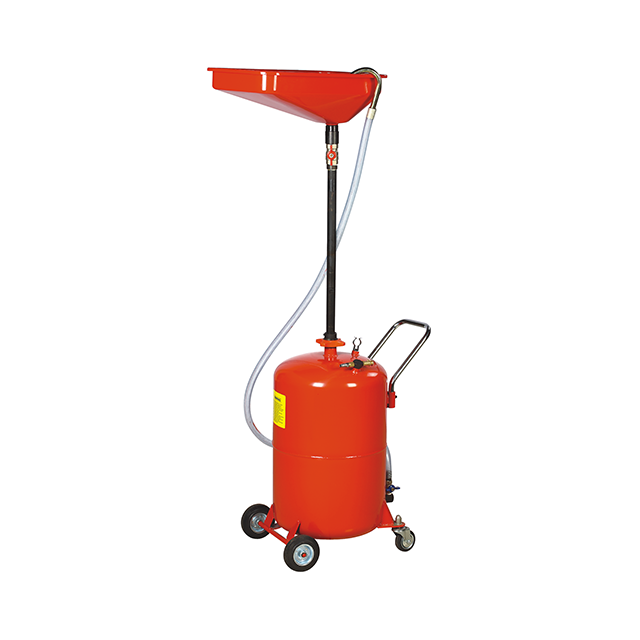
A glossy product photo rarely tells the whole story. You must dig into the actual build parameters. Thoroughly reviewing oil drainer specifications prevents you from buying a tool poorly suited for your shop.
Never confuse total tank size with safe working capacity. A 20-gallon tank cannot safely hold 20 gallons of waste oil. The functional working volume typically maxes out at 80% of the total size. Overfilling past this threshold risks internal pressure buildup and immediate overflow. Calculate your daily fluid volume. Then size your tank so technicians only empty it once per shift.
How you empty the full tank dictates your operational downtime. Gravity drain-valves require floor-level disposal grates. Hand rotary pumps demand strenuous manual labor. Pneumatic pressurization uses standard shop air to push oil into bulk storage rapidly. Diaphragm pumps offer continuous flow for extreme volumes. Assess your shop infrastructure before committing to an evacuation style.
Evacuation Method Speed Comparison
Evacuation Type | Power Source | Average Emptying Speed | Best Application |
|---|---|---|---|
Gravity Valve | None (Gravity) | Slow (5-10 minutes) | Small garages, DIY |
Hand Rotary Pump | Manual Labor | Moderate (3-5 minutes) | Mobile service vans |
Pneumatic Air | Shop Compressor | Fast (1-2 minutes) | High-volume dealerships |
Electric Diaphragm | 110V/220V Outlet | Very Fast (Continuous) | Industrial depots |
You generally choose between rolled steel and High-Density Polyethylene (HDPE). Steel handles intense impacts and resists extreme heat. However, steel adds significant weight and risks rust over time. HDPE offers incredible chemical resistance. It remains lightweight and eliminates corrosion concerns. Evaluate the specific impact resistance needed for your concrete shop floors.
Broken wheels represent the number one failure point noted by heavy users. A fully loaded 25-gallon tank weighs over 200 pounds. Cheap plastic casters shatter under this weight. Look exclusively for polyurethane or solid rubber wheels. Ensure they include sturdy locking mechanisms. A rolling tank poses a massive safety hazard near open maintenance pits.
An oversized funnel captures erratic fluid surges easily. Look for wide-mouth funnels measuring at least 15 inches across. Evaluate the height-adjustable locking mechanisms carefully. Flimsy friction locks slip, causing the funnel to crash downward mid-drain. Finally, demand integrated debris screens. These screens catch dropped drain plugs instantly. They save mechanics from fishing metal parts out of hot, dirty fluid.
Pneumatic evacuation saves time but introduces serious safety risks. Technicians use shop air to pressurize the tank to expel the waste oil. Missing or faulty pressure relief valves cause catastrophic failures. Over-pressurization leads to explosive tank rupture or seal blowouts. Always verify your chosen model features an automatic safety pop-off valve set strictly between 10 and 15 PSI.
Valves and gauges degrade through constant chemical exposure. Ball valves under the funnel often leak if dirt scores the internal ball. Sight-glass gauges crack or cloud over time. Chemical-resistant O-rings remain essential for longevity. Regular motor oil, gear lube, and transmission fluids break down cheap rubber rapidly. You must specify Viton or specialized nitrile seals when selecting commercial equipment.
Shop floor space remains a premium commodity. A unit might look fantastic on paper but fail in reality. A base footprint that is too wide obstructs lift posts. It trips moving technicians and blocks tool carts. Measure the gap between your lift arms carefully. Ensure your chosen model tucks away cleanly against the wall when not in use.
Your relationship with the manufacturer matters immensely. Partnering with an experienced oil drainer supplier goes beyond the initial transaction. You are investing in long-term operational uptime.
Avoid cheap "throwaway" brands at all costs. Commercial equipment breaks down eventually. A trustworthy supplier must offer an extensive catalog of replacement parts. You will need new funnels, replacement wheels, and fresh gauge tubes over the next decade. If the supplier cannot ship a replacement O-ring within a few days, find a different brand.
Environmental regulations heavily penalize improper fluid handling. Ensure the supplier’s products meet strict OSHA guidelines for workplace safety. The equipment must also align with EPA guidelines for fluid containment and transfer. Certified equipment protects your business from costly compliance audits and safety lawsuits.
A brief 90-day warranty signals low confidence in product durability. Look for a minimum one-to-two-year warranty on commercial-grade equipment. The warranty should cover weld integrity and pneumatic valve function. Additionally, test their accessible B2B customer support. Responsive technical assistance keeps your service bays running smoothly during sudden equipment faults.
Decision paralysis sets in when browsing dozens of similar models. Use this systematic logic to narrow your choices rapidly.
Step 1: Calculate your maximum daily fluid volume. Multiply your average daily oil changes by the average vehicle fluid capacity. Use this number to determine your ideal tank size.
Step 2: Audit your shop infrastructure. Determine if you have reliable, regulated shop air. Note whether your technicians work primarily on tall lifts or directly on the ground.
Step 3: Compare two or three shortlisted models strictly on criteria of mobility and evacuation speed. Inspect the caster materials and air inlet valves closely.
Step 4: Verify supplier credentials, assess long-term part availability, and check warranty limits to guarantee future reliability.
Choosing the right oil drainer impacts your daily profitability directly. It is not just a simple catch-pan. It serves as a vital piece of efficiency-driving shop equipment. Do not compromise on caster quality, as mobility dictates speed. Never ignore evacuation safety features, as pressurization demands strict controls. By matching tank capacity and extraction methods to your actual workload, you eliminate spills and speed up service times. We prompt you to consult with a fluid management specialist. Browse a curated catalog of commercial-grade equipment to secure the perfect fit for your bays today.
A: A drainer uses gravity to catch fluid falling from an opened lower-pan plug. An extractor uses vacuum suction to pull fluid upward directly through the engine dipstick tube. Extractors keep technicians clean and avoid thread wear, while drainers handle faster, high-volume drops.
A: Close all top intake valves securely. Connect your shop air hose to the designated pneumatic inlet. Keep the regulator strictly below 15 PSI. The internal pressure pushes the oil out through the evacuation hose. Always rely on the built-in safety relief valve to prevent over-pressurization.
A: We recommend 18 to 27-gallon units for standard commercial auto bays. This size easily holds fluids from roughly 15 passenger vehicles. It strikes the perfect balance between mobility and minimizing daily emptying frequency.
A: Yes, but you must avoid cross-contamination. Mixing waste oil with coolant ruins recycling viability. You need dedicated, clearly color-coded drainers for different fluid types to meet environmental disposal regulations safely.