English
Views: 0 Author: Site Editor Publish Time: 2026-10-08 Origin: Site


Relying on cold water to clear heavy industrial grime creates a massive operational bottleneck. Grease, oil, and stubborn sludge simply smear across surfaces under cold pressure. This frustrates your workers and severely slows down daily production. Transitioning to a thermal cleaning system represents much more than a basic equipment purchase. It acts as a fundamental operational shift. This shift directly impacts your labor time, environmental compliance, and daily utility expenses. You need a setup built specifically for your exact soil types. This article provides a practical, evidence-based framework for evaluating your options. We help you select the right equipment based on actual cleaning demands. You will learn how to size your system correctly. We guide you through temperature dynamics, flow rates, and fuel types. This ensures optimal performance and prevents you from overspending on unnecessary specifications.
Cold water systems present clear operational limitations. They rely heavily on harsh chemical detergents and extended labor hours to achieve acceptable results. Furthermore, they deliver extremely poor outcomes on hydrocarbons. Cold water cannot break down greasy residues. It merely pushes the top layer around the surface. Your team ends up wasting hours manually scrubbing concrete floors or machinery parts.
Heat completely changes the science of emulsification. Thermal energy lowers the surface tension of the water itself. This process melts oily residues at a molecular level. It breaks the strong cohesive bonds holding grease to concrete or steel substrates. Once those bonds break, the oil mixes easily into the water stream. This allows the runoff to carry the contaminants away effortlessly.
You must carefully weigh the cost-benefit analysis before purchasing equipment. A hot water pressure washer requires a higher initial capital expenditure than a cold-water alternative. However, you quickly offset this upfront cost. You spend significantly less money purchasing industrial degreasers by the drum. More importantly, your team finishes demanding cleaning jobs in half the time. This accelerated labor time translates directly to higher daily productivity and lower payroll waste.
Defining clear success criteria helps justify this upgrade. Daily fleet washing serves as a prime example. Washing dozens of muddy, oil-stained trucks requires high efficiency. Heavy equipment degreasing also demands intense thermal energy. Food and beverage facility sanitation requires strictly regulated hot water to meet health compliance standards. If your operations face these tasks daily, the upgrade makes perfect operational sense.
Temperature acts as the primary catalyst for commercial sanitation. You need to thoroughly understand "Delta-T" to evaluate heating machines properly. Delta-T represents the temperature rise from the input source to the output nozzle. If your incoming groundwater sits at 60°F and you need a 200°F output, your machine requires a Delta-T of 140°F. If you operate outdoors during winter using 40°F water, achieving that same output demands a much larger burner.
Optimal temperature ranges depend entirely on your specific contaminants. General oils and light automotive fluids break down effectively around 140°F. Heavy industrial greases, hydraulic fluids, and facility sterilization tasks require 200°F or more. You must size your burner to consistently hit these specific thermal targets.
Gallons Per Minute (GPM) serves as the flusher. GPM is often far more critical than PSI for heavy-duty commercial applications. High flow carries away the emulsified grease quickly before it can re-adhere to the surface. If your flow remains too low, the melted grease simply cools down and sticks to the concrete again. A robust hot-water high-pressure washer relies on high flow volume to transport debris away efficiently.
Pressure (PSI) functions strictly as the breaker. Appropriate PSI ranges sit between 2,000 and 3,000 PSI for most thermal applications. The heat already does the heavy lifting by melting the bonds. Therefore, you rarely need extreme pressure ratings. Over-pressurization creates serious facility risks. You might severely damage underlying substrates, gouge softer materials, or accidentally strip intact paint.
| Metric Element | Primary Cleaning Function | Ideal Commercial Range | Risk of Overreach |
|---|---|---|---|
| Delta-T (Temperature) | Melts bonds and emulsifies heavy oils. | 140°F - 200°F+ | Steam burns, warping delicate plastics. |
| GPM (Flow) | Flushes away loose debris and melted grease. | 4.0 - 8.0 GPM | Depleting on-site water supply rapidly. |
| PSI (Pressure) | Breaks initial surface dirt and mud layers. | 2,000 - 3,000 PSI | Gouging concrete, stripping required paint. |
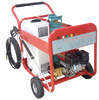
Burner systems traditionally utilize diesel, kerosene, or #2 fuel oil. These systems offer incredibly rapid heating capabilities. They provide excellent portability for remote field service operations. You can mount them on trailers and achieve maximum temperature outputs anywhere. However, they consistently produce exhaust emissions. You must manage complex fuel storage logistics and constantly refill the tanks. Due to carbon monoxide risks, you must use these systems strictly outdoors or in heavily ventilated open bays.
Electric heated systems offer a completely different set of advantages. They produce zero local emissions. This characteristic makes them perfectly suitable for indoor food processing plants and manufacturing facilities. They also require significantly less daily maintenance because they lack an open flame burner. On the downside, they exhibit much slower heating times. They demand heavy electrical infrastructure, usually requiring 230V or 460V 3-phase power. Because they tie directly into facility wiring, they completely lack portability.
Natural gas or propane stationary systems serve fixed locations exceptionally well. They offer highly cost-effective utility integration. You gain a continuous, uninterrupted fuel supply for fixed indoor or covered wash bays. You never have to manually refill a diesel tank. However, these systems remain entirely immobile. They require professional gas plumbing to install. You also need proper, code-compliant roof venting installation to ensure operator safety.
Many buyers fall for the DIY fallacy. They attempt routing a standard cold-water unit through a domestic commercial water heater to save money. This setup fails catastrophically every time. Standard pump seals are rated exclusively for cold water. Exposure to 150°F water melts these internal rubber packings instantly. This leads to immediate, permanent equipment failure. Commercial heating systems place the heating coil after the pump to protect these vital components.
Coil scaling presents another significant daily challenge. Hard water heavily impacts internal heating coils. Over time, calcium and magnesium deposits build up inside the metal tubing. This scale acts as an insulator, which restricts water flow and destroys thermal efficiency. Your burner runs longer to achieve the same temperature, wasting fuel. You must perform routine chemical descaling annually to maintain peak performance.
Pump wear and tear requires constant monitoring. High operational temperatures place immense stress on all internal parts, even when properly engineered. Ceramic plungers, packings, and bypass valves degrade faster under continuous commercial use. You must replace these wear items proactively. Neglecting basic maintenance schedules causes unexpected downtime during critical operating hours.
Safety considerations demand serious operational attention. Operating pressurized water above 200°F introduces severe workplace risks. Steam burns can happen in fractions of a second if a hose ruptures. Operators need comprehensive PPE upgrades before handling this equipment. Heavy-duty thermal gloves, full face shields, and insulated waterproof boots become absolute safety mandates.
Choosing the correct equipment requires a systematic approach. You cannot simply buy the unit displaying the highest numbers on the specification sheet. Follow these strict evaluation steps to ensure you select the right machine for your facility.
Next-Step Action: We highly recommend scheduling an on-site demonstration. Consult directly with a commercial equipment dealer to audit your specific facility constraints. A professional site audit reveals hidden utility limitations before you finalize a purchase.
Upgrading to a hot water system represents a major investment in your operational efficiency, not just a simple tool upgrade. By introducing thermal energy to your cleaning process, you eliminate the need for aggressive manual scrubbing. You also drastically reduce your reliance on expensive chemical detergents.
We advise buyers to prioritize high Flow (GPM) and reliable Temperature (Delta-T) over chasing maximum PSI numbers. Breaking the bonds of grease requires heat and volume, not destructive force. Protecting your substrates while cleaning faster remains the ultimate goal.
Take action today to optimize your cleaning protocols. Request a custom specification review from a certified dealer. View a curated selection of commercial-grade units tailored specifically to your exact industrial application and daily workflow.
A: No. Standard pumps use seals and components that will warp or melt above 100°F-140°F, leading to immediate pump failure. True thermal units heat the water after it passes through the high-pressure pump.
A: Pressure washers focus on high flow (GPM) at sub-boiling temperatures (up to 210°F) to move heavy debris. Steam cleaners use drastically lower pressure and flow but operate at 250°F+ to sanitize and disinfect surfaces.
A: Typically 2x to 3x the initial cost due to the heating coil, burner assembly, and high-temp pump components, though ROI is often achieved quickly via saved labor and reduced chemical costs.
A: Yes. You must use detergents specifically formulated for high temperatures. Standard cold-water chemicals may flash off rapidly, foam excessively, or become completely ineffective when exposed to intense heat.