English
Views: 0 Author: Site Editor Publish Time: 2026-08-26 Origin: Site


Sourcing heavy equipment represents a high-stakes capital investment for any construction firm. Under-specifying leads to immediate project bottlenecks. Over-specifying simply drains your profit margins. Many procurement managers struggle with this balance constantly. They find it difficult translating manufacturer marketing claims into operational realities. You might review a glossy brochure and assume a machine fits your job site perfectly. Later, you realize it lacks the required yield. This guide bypasses surface-level features entirely. We dissect the exact technical details you need. We highlight the criteria required to evaluate and purchase a concrete mixer confidently. You will learn how to accurately calculate mixing yields. We also cover motor dynamics, build integrity, and structural metrics. Furthermore, we break down exactly what makes a supplier truly reliable. Read on to ensure your next capital purchase performs exactly as promised on the job site.
Capacity ≠ Yield: Always calculate operational output based on mixing yield (typically 60-80% of total drum volume), not stated gross capacity.
Power & Drive: Matching motor type (electric vs. internal combustion) and drive mechanism (gear vs. belt) to site constraints is non-negotiable for uptime.
Build Integrity: Steel gauge, weld quality, and chassis rating dictate the lifespan and long-term equipment durability.
Supplier Accountability: A reliable supplier is vetted on parts availability, verifiable warranty terms, and post-sale technical support, not just upfront pricing.
You cannot evaluate machinery effectively without first defining your job site realities. Equipment sourcing must begin by outlining strict operational limits. You need to know exactly how much material your crew processes daily. You also need to understand your environmental constraints.
Establish your baseline volume requirements before looking at product catalogs. Calculate how many cubic yards or meters per hour your team needs. You must keep crews active constantly. Material staging delays ruin project profit margins. Measure your crew's average pour rate during peak hours. Then, size your equipment to exceed this rate by twenty percent. This strategic buffer absorbs unexpected delays. It also prevents the machine from running at maximum load continuously.
Frame your buying decision around environmental realities. Power availability dictates your motor selection heavily. Assess whether you have access to reliable 110V or 220V electrical grids. Remote sites often require internal combustion engines burning gas or diesel. Footprint restrictions also play a major role. Urban environments demand compact units for tight alleyways. Towing compliance matters deeply for portable units traversing public highways. Ensure your selected unit meets local weight and axle regulations.
You must differentiate specification priorities based on your workflow. Continuous pour projects favor volumetric designs. They also benefit from high-RPM automated systems. Standard batch jobs operate differently. They require robust drums capable of handling distinct, separated loads. Batch operations rely heavily on rapid discharge speeds. You want a machine capable of dumping its load quickly to keep wheelbarrows moving. Slower discharge cycles add minutes to every batch. These minutes accumulate into hours of wasted labor weekly.
Manufacturers often highlight numbers designed to look impressive. Procurement teams must look past these surface figures. You need to understand the underlying mechanics driving these specifications. Let us review the exact concrete mixer specifications you must scrutinize.
You must understand the fundamental difference between volume and yield. The "80% Rule" governs all mixing equipment. Loading a drum to its gross maximum prevents proper material fold. It stops aggregates from tumbling correctly. Overloading also damages the motor prematurely. It strains the gearbox beyond its rated torque capacity.
Always instruct buyers to demand "wet/mixed yield" numbers from manufacturers. If a drum holds nine cubic feet of air space, it usually yields roughly six cubic feet of usable material. Planning your project around the gross volume guarantees labor delays. It forces crews to wait while the machine processes smaller batches.
Break down horsepower and wattage realities during your evaluation. Higher horsepower is strictly required for low-slump concrete. Stiffer mixes resist blade movement aggressively. Weak motors stall when pushing heavy gravel ratios. You must match motor power to your standard mix design.
You also need to understand drive mechanisms deeply. These mechanisms transfer power from the motor to the drum.
Feature | Direct-Drive Gearbox | Belt-Driven System |
|---|---|---|
Maintenance Needs | Low maintenance; fully enclosed system. | Higher maintenance; requires regular tension adjustments. |
Torque Delivery | High torque transfer; excellent for stiff mixes. | Vulnerable to slippage under extreme heavy loads. |
Field Repairs | Complex; usually requires shop disassembly. | Easy; crews can replace a snapped belt on-site in minutes. |
Noise Levels | Generally quieter operation. | Can squeal or vibrate if misaligned. |
Rotational speed matters immensely for material quality. Define the ideal RPM range for homogenous mixing. Most commercial drums operate optimally between 25 and 30 revolutions per minute. Spinning too fast pins material to the drum walls via centrifugal force. Spinning too slowly segregates aggregates from the cement paste.
Link cycle time specifications directly to your daily labor costs. A machine boasting a three-minute cycle saves massive amounts of time over a five-minute cycle. Over a ten-hour shift, faster cycles yield significantly more material. This efficiency reduces idle labor overhead drastically.
Machinery looks identical when freshly painted on a showroom floor. The true differences emerge after six months of aggregate abrasion. You must evaluate structural components rigorously. Build quality dictates long-term equipment survival.
Analyze the necessity of high-tensile steel versus polyethylene drums. Polyethylene drums are remarkably easy to clean. Operators can simply tap the outside to break loose dried material. However, poly is largely unsuitable for heavy commercial aggregate use. Jagged gravel gouges plastic over time. You need high-tensile steel for commercial applications. Look for 10-gauge steel or thicker. Thicker steel resists denting from dropped cobble and heavy shovel impacts.
Assess internal mixing paddle designs carefully. The blades do the actual work. Look for bolted blades rather than welded blades. Bolted configurations allow easy field replacements when they eventually wear down. Welded blades require grinding and hot work to replace. You should also seek multi-angle blade configurations. Complex angles fold the material faster. They also accelerate the discharge speed significantly when you tilt the drum.
Mobility specifications define how safely you transport the unit. Verify highway-rated axles for towable units. Ensure the leaf springs can handle bumpy rural roads. Standard hitch compatibility is crucial. Check whether your fleet uses pintle rings or standard ball hitches. Mismatched hitches cause major logistical headaches. Finally, inspect the stabilization legs. Reinforced, locking legs prevent the unit from tipping during heavy, unbalanced load discharges.
Common Mistake: Ignoring the tongue weight. Always verify your transport vehicle can safely support the heavy steel chassis during highway transit.
Best Practice: Grease the wheel bearings immediately upon delivery. Factory grease jobs are notoriously light.
Evaluating theoretical specifications is helpful. Applying those specifications to a real-world model provides actionable clarity. We will use a specific unit to demonstrate proper procurement analysis.
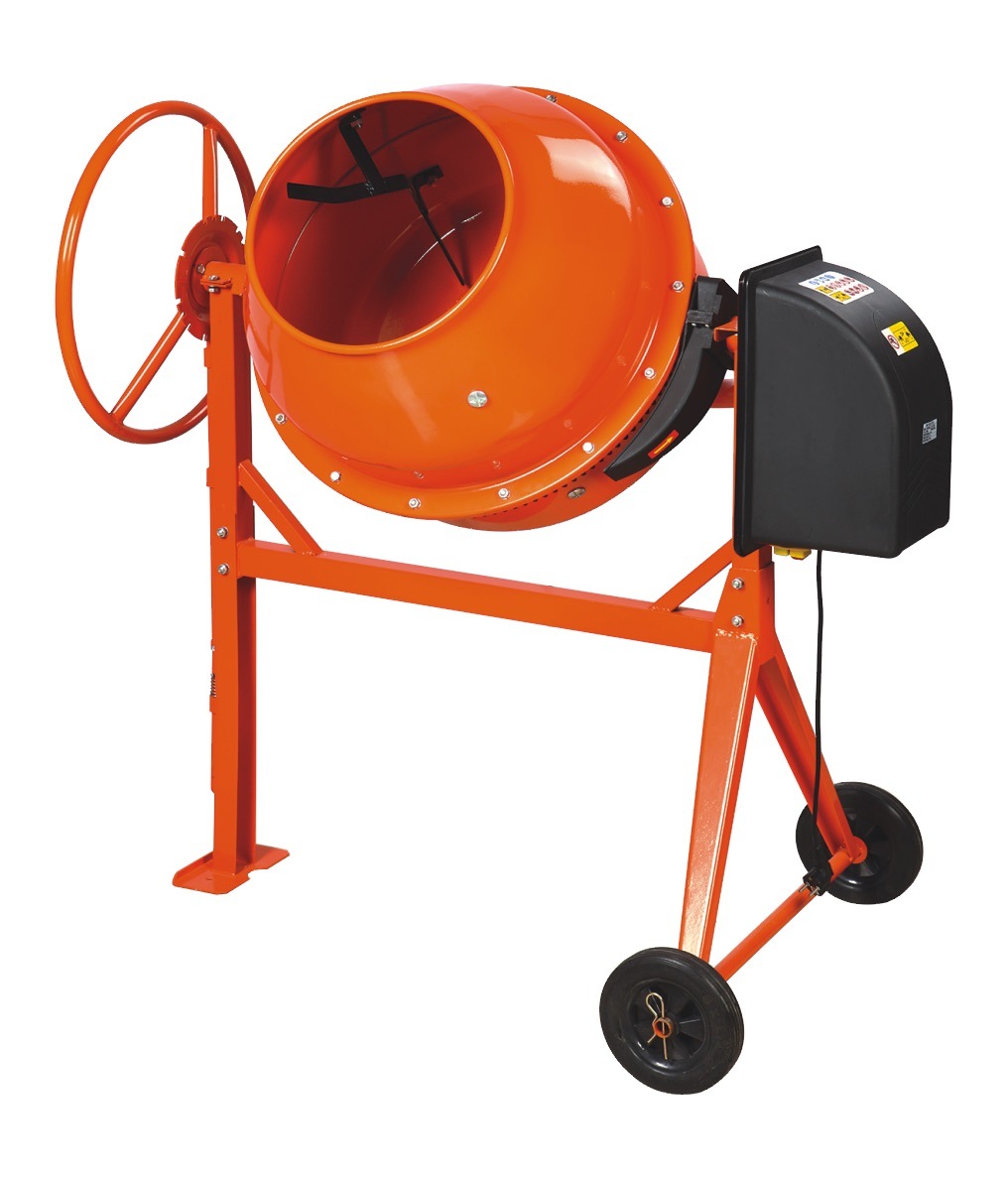
Use this specific model as a practical evaluation benchmark. It represents a standard mid-tier commercial sourcing option. It bridges the gap between light-duty residential units and massive tow-behind commercial rigs. Procurement managers frequently evaluate machines in this exact class. They need reliable daily runners for medium-scale hardscaping and foundational work.
Analyze its stated capacity carefully. Look at the drum material and motor configuration. Models in this category typically feature thick steel drums designed for daily abrasive loads. They generally utilize robust electric motors. These motors provide consistent torque without the hassle of fuel management. The steel chassis provides rigid support. It prevents flexing when the drum holds maximum wet weight. You must compare these specific traits against your typical use cases.
Detail exactly what scale of project fits these specifications. The DJ HCM130 excels in specific environments. It handles foundation pouring exceptionally well. It serves hardscaping contractors building large retaining walls perfectly. It provides enough yield to keep a three-man crew busy consistently.
However, you must know when to scale up or down. If you pour massive commercial slabs daily, you need a larger volumetric truck. If you only patch sidewalks occasionally, this unit might be overkill. Matching the machine's sweet spot to your core business operations ensures maximum profitability.
The highest quality machine becomes worthless if you cannot source replacement parts. Frame your purchase as a long-term partnership. The best specifications mean absolutely nothing if the machine sits grounded for weeks.
Look past the initial purchase price. You are buying a support ecosystem. Ask the supplier about their service response times. Find out who handles technical troubleshooting. A dedicated technical support line saves crews hours of frustration. E-mail only support systems indicate poor post-sale infrastructure.
You must audit a supplier's domestic or regional parts warehousing. Ask them specifically about stock levels for high-wear items. You will eventually need replacement blades, belts, and bearings.
Request a parts list: Ask for a catalog of standard replacement items.
Check availability: Ask the supplier to confirm current stock levels for drive belts.
Verify shipping speed: Confirm whether they offer overnight shipping for critical breakdown components.
Assess regional presence: Suppliers with regional distribution hubs eliminate costly cross-border shipping delays.
Identify common loopholes in heavy equipment warranties immediately. Some warranties look comprehensive but hide major exclusions. A manufacturer might cover the electric motor for two years. However, they might exclude the gearbox entirely. They usually exclude drum wear completely, labeling it "standard operational degradation." Read the fine print carefully. Ensure the warranty covers catastrophic structural failures.
Ensure the supplier provides necessary compliance documentation upfront. Site inspectors demand paperwork. You need CE marks or ISO certifications depending on your region. Lacking proper safety certifications can trigger site shutdowns. An established supplier provides these documents digitally before you even finalize the purchase.
Sourcing reliable heavy equipment requires strict attention to detail. You must move past marketing hype and analyze actual machine capabilities. We explored how defining yield requirements prevents job site bottlenecks. We evaluated motor types, drive mechanisms, and essential build materials. We also established a framework for benchmarking specific models against your actual daily operations.
Your shortlisting logic should now be clear. Define your operational yield strictly. Select your power and drive systems based on site realities. Verify high-tensile build materials. Finally, audit your chosen supplier for robust post-sale support.
Your actionable next step is straightforward. Contact your shortlisted vendors today. Encourage your procurement team to request a detailed, itemized spec sheet. Demand a formal Service Level Agreement regarding replacement parts. Secure these guarantees before ever requesting a final quote.
A: Industry terminology matters. Cement is merely the dry powder ingredient. Concrete is the final structural product created by adding water and heavy aggregates like gravel. People use the terms interchangeably. However, true heavy-duty units are engineered specifically to process coarse, heavy rock aggregates without stalling the motor.
A: Use a simple heuristic based on your transport methods. A standard contractor wheelbarrow holds about three cubic feet. If you have two laborers hauling material, you need a machine yielding at least six cubic feet per batch. Match your mixed yield directly to your wheelbarrow count to optimize pacing.
A: Look for highly accessible grease zerks on all moving joints. You want easy-drain oil ports on the gearbox to encourage regular fluid changes. Additionally, ensure all electrical switches feature commercial-grade water sealing. Workers clean these machines with high-pressure hoses daily; exposed electronics fail quickly.
A: Yes, modern electric motors provide immense, consistent torque. They excel in stationary or indoor commercial environments where exhaust fumes are prohibited. However, you must manage voltage drops. Using excessively long, low-gauge extension cords starves the motor of power, causing it to overheat and fail prematurely.