English
Views: 0 Author: Site Editor Publish Time: 2026-10-01 Origin: Site


Industrial surface preparation routinely battles three significant bottlenecks. Facilities face severe airborne dust hazards, strict regulatory compliance demands, and rapidly escalating consumable media costs. Left unmanaged, these overlapping issues drain operational budgets and expose workers to serious respiratory dangers. We need a reliable method to mitigate these risks without stalling essential daily workflows. A closed-loop system directly addresses both containment and material efficiency simultaneously. This article explores how a vacuum sandblaster functions to control dust while recovering media on the fly. You will learn the mechanical principles behind cyclonic recovery and how to select optimal equipment for your specific operational needs. We provide an objective framework to help you evaluate vacuum blasting technology, match compressor requirements, and implement safe, compliant surface preparation practices in your facility.
Workplace safety requires proactive equipment decisions. Closed-loop systems trap hazardous dust immediately upon impact. This mitigates severe respiratory risks like crystalline silica exposure. Regulatory bodies heavily scrutinize industrial surface preparation tasks. You do not need to build full blast room enclosures anymore. Operators stay safe while meeting stringent workplace safety standards effortlessly. This approach decentralizes your maintenance tasks securely across the facility.
Financial returns heavily depend on material efficiency. You can recycle durable media multiple times throughout a project. Steel grit and aluminum oxide perform exceptionally well here. Open blasting consumes single-use abrasives rapidly and wastefully. Recycling shifts this dynamic to favor long-term material preservation. You purchase less media while maintaining high cutting performance. This directly boosts your project profitability margins significantly.
Time remains a critical metric for any facility manager. You can perform surface preparation adjacent to other workers. Sensitive machinery remains completely safe nearby during active blasting. The closed-loop design eliminates cross-contamination risks entirely. This capability keeps entire production floors active during vital maintenance. You avoid costly facility shutdowns completely. Productivity remains high across all departments concurrently.
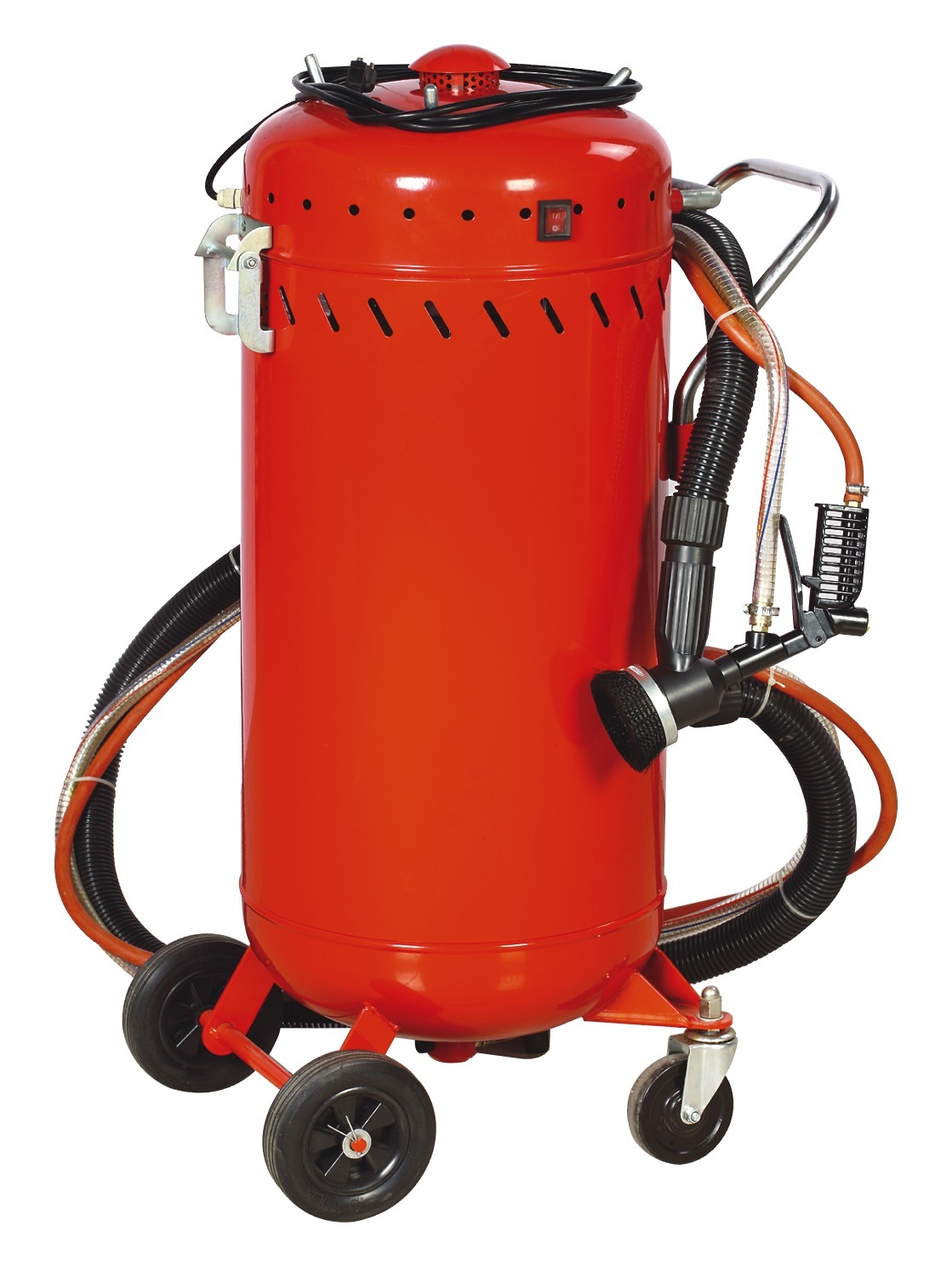
A specialized containment head drives the entire system dynamically. It simultaneously blasts the surface and vacuums the rebound instantly. A thick, durable bristle brush creates a tight seal against the metal substrate. This seal traps dangerous particles immediately upon impact. The operator holds this head firmly against the workpiece. High-velocity abrasive cleans the surface while the vacuum pulls everything backward.
The mixture of air, dust, and abrasive enters a specialized separator. We can break down this airflow process sequentially:
Captured air must undergo rigorous cleaning before release. Standard filtration handles most common rust and paint particles effectively. Highly toxic coatings demand immediate HEPA filtration upgrades. Lead paint and chromates require these advanced, micro-porous filters. Clean air finally exhausts back into the surrounding environment safely. This exhaust process protects both the operator and the broader facility from microscopic pollutants.
Compressors act as the literal heartbeat of your system. You must match your air compressor output correctly to the equipment. The sandblaster’s consumption rate dictates this strict baseline requirement. Mismatched CFM remains the most critical point of deployment failure. You must account for continuous air draw during operation. A starved system loses vacuum suction and leaves hazardous dust behind.
Dense media types challenge standard vacuum motors significantly. You must evaluate the motor's total vacuum lift capacity. Long hose lengths increase internal friction and reduce available suction. A robust vacuum motor prevents clogs during extended operation periods. Upgrading the motor often solves frequent hose blockages. You need strong suction to pull heavy steel grit upward consistently.
You need to classify the toxicity of your typical coatings. Standard filter cartridges serve general rust removal perfectly well. HEPA filters become strictly necessary for hazardous material abatement. Choose your filtration tier wisely to protect your operators. Upgraded filters require slightly stronger vacuum motors to push air efficiently. We recommend auditing your primary coating types before purchasing any machine.
Not all abrasives belong in closed-loop recovery systems. Some media shatter instantly upon initial impact. These fragile materials clog vacuum systems rapidly and persistently. We highly recommend using durable, recyclable abrasives only. Steel grit, garnet, and aluminum oxide offer excellent recovery rates. Slag and crushed glass generate excessive fine dust upon impact. This dust blinds filter cartridges and stalls production completely.
Abrasive Media Recovery Suitability Chart
| Media Type | Recyclability | Impact Profile | System Recommendation |
|---|---|---|---|
| Steel Grit | High (100+ cycles) | Highly durable, cuts aggressively | Ideal for closed-loop recovery |
| Aluminum Oxide | High (30-40 cycles) | Hard, retains sharp edges | Excellent for targeted etching |
| Garnet | Medium (4-5 cycles) | Semi-durable, clean cutting | Good for general surface prep |
| Coal Slag | Low (Single use) | Shatters on impact, high dust | Not recommended |
| Crushed Glass | Low (Single use) | Friable, creates dense powder | Avoid to prevent clogging |
The DJ-SB28 vacuum sandblaster delivers highly consistent performance across demanding environments. It balances optimal pressure ranges with excellent media recovery efficiency. The unit handles demanding industrial stripping tasks effortlessly and safely. The integrated vacuum recovers abrasives continuously during every single operation. You experience zero lag between blasting and media retrieval. This seamless operation maximizes operator efficiency on the floor daily.
This equipment shines in specific operational environments. We frequently observe success in these key applications:
You must prepare your infrastructure carefully before installation. Deploying the system requires a stable, dedicated power supply. Ensure your current compressor size matches the stated CFM demands exactly. The compact physical footprint allows easy maneuvering through tight workspaces. You can roll the unit directly to the problematic workpiece quickly. This mobility eliminates the need to transport heavy parts across your shop.
We must set realistic operational expectations for new users. A vacuum sandblaster operates slower per square inch fundamentally. Traditional open abrasive blasting strips broad surfaces faster initially. However, closed-loop systems eliminate massive cleanup phases entirely. You win on overall project time effortlessly when factoring post-blast cleanup. Labor hours shift from sweeping dust to active surface preparation.
Flat surfaces provide the easiest work areas for operators. Maintaining a vacuum seal on complex profiles proves difficult frequently. Deep corners and heavily textured surfaces challenge the brush head severely. You may experience minor abrasive loss around irregular, sharp edges. Custom brush attachments can help mitigate these distinct geometry issues. We recommend evaluating your most common part shapes carefully.
Operators face a distinct learning curve during initial adoption. You must maintain correct brush seal pressure constantly against the metal. Pushing too hard restricts necessary airflow and jams the nozzle. Floating the brush too lightly allows dangerous dust to escape. Proper technique prevents unnecessary abrasive loss and ensures safety. Training your team on this physical balance pays immediate dividends.
Continuous abrasive flow degrades internal rubber components rapidly. You should budget for regular replacement cycles proactively. Blast nozzles and internal hoses wear down over time naturally. Containment brushes lose their sealing ability eventually through friction. Proactive scheduling keeps the system running perfectly without surprise downtime. Keep spare brushes and nozzles near the machine always.
Transitioning to this closed-loop technology represents a highly strategic operational move. You prioritize compliance, workplace cleanliness, and media efficiency simultaneously. These vital factors easily outweigh raw stripping speed metrics. Your operators gain a significantly safer working environment immediately.
Follow these practical next steps to begin your equipment transition smoothly:
A: Yes, the direct blasting action operates noticeably slower. Traditional methods strip a larger surface area per minute. However, your total job time is often much shorter. You eliminate manual cleanup phases and extensive containment preparation entirely.
A: No, optimal results require recyclable, hard media types. You should use steel grit, garnet, or aluminum oxide. Friable media like crushed glass or slag creates excessive dust. This shattered material overwhelms the filters and clogs the internal systems.
A: The system loses crucial vacuum suction immediately. This break results in localized dust escaping into the ambient air. You will also lose unrecovered abrasive media onto the floor. Maintaining consistent, flush contact is essential for clean operation.
A: You must check two separate air consumption ratings. First, evaluate the blast nozzle consumption requirements. Next, factor in the pneumatic vacuum generator requirements. Mismatching these combined figures leads to poor suction and frequent hose blockages.