English
Views: 0 Author: Site Editor Publish Time: 2026-08-28 Origin: Site


Choosing the wrong blast media ruins expensive parts rapidly. It also wrecks your internal equipment components. Selecting an incompatible abrasive material causes poor surface finishes. It accelerates hardware wear and drastically increases media consumption expenses. Furthermore, it creates severe compliance bottlenecks for your facility. Many buyers purchase a machine first and choose abrasives later. This backward approach guarantees operational failure. Media selection must dictate your equipment purchasing decisions. Your substrate characteristics, desired anchor patterns, and production volume need precise alignment with the hardware. Substrates dictate the entire process. This guide provides procurement and operations teams with an evidence-based framework. You will learn how to evaluate various abrasive materials properly. We will show you how to match these specific materials to the exact hardware setups required for optimal performance.
The substrate dictates the media: Aggressive abrasives require heavy-duty hardware, while soft media demands specialized metering.
Media recyclability drastically alters Total Cost of Ownership (TCO); cheap single-use slag often costs more long-term than premium steel grit.
Precise matching of material properties (Mohs hardness, mesh size) to equipment capabilities prevents part warpage and operational downtime.
Navigating OSHA compliance regarding silica exposure is a non-negotiable baseline for modern surface preparation.
Evaluate the base substrate carefully before you open any abrasive catalogs. Every material reacts differently to high-velocity impact. Thin-gauge metals warp severely under high friction heat. Softwoods splinter and degrade under heavy abrasive impact. Precision-machined parts lose tight tolerances very easily. You must define your exact material limits first. Knowing these limits prevents catastrophic part damage.
You must also define specific success criteria for the finished surface. Different applications demand entirely different abrasive actions.
Coating Adhesion: Industrial paint requires specific mil-profile anchor patterns. You must match the abrasive angularity to the paint manufacturer's specifications. Angular media bites into the steel. This creates microscopic peaks and valleys for epoxy adherence.
Cleaning and Restoration: This process demands highly selective stripping. You must remove surface contaminants without altering base dimensions. Restoring historical automotive parts requires gentle media.
Peening and Strengthening: This technique requires strictly spherical media. Spherical shapes impart compressive residual stress into the metal. This action strengthens the part without cutting or removing material.
These requirements carry massive system implications. A surface preparation industrial sandblaster needs proper calibration. You must calibrate the equipment to the specific gravity of your chosen material. You must also account for the precise flow rate. Doing so avoids media bridging inside the hopper. It also prevents erratic abrasive pulsing at the blast nozzle.
Operators classify abrasive media by hardness, shape, and density. You must evaluate these three factors against your substrate. We divide media into two distinct categories.
Heavy-duty industrial applications rely on aggressive materials. These abrasives remove tough coatings and deep rust rapidly.
Aluminum Oxide: This material features a high Mohs hardness of 8 to 9. It cuts extremely fast. You can recycle it many times. Risk: It acts aggressively on equipment internals. You must install boron carbide nozzles. Heavy-duty material hosing remains absolutely essential.
Steel Grit & Shot: This represents the industry standard for heavy rust. It removes mill scale effortlessly. Recyclability shines here. Facilities often achieve over 100 cycles. Constraint: High bulk density demands significant airflow. You need specialized mechanical recovery floors to move this heavy material.
Garnet: This mineral provides a versatile, lower-dust alternative to silica sand. It works exceptionally well for general industrial use. Many shipyards prefer it. However, its recyclability remains limited compared to metallic abrasives.
Delicate parts require entirely different materials. Soft media cleans surfaces without altering the underlying substrate.
Glass Beads: The spherical shape cleans and peens safely. It leaves the base metal completely intact. Automotive rebuilders find it ideal for engine parts. It creates bright, cosmetic finishes.
Walnut Shells & Corn Cob: These represent organic, non-damaging media options. Use them for delicate substrates. Wood, fiberglass, and fragile engine components benefit greatly. Risk: They absorb moisture easily. You must maintain strict environmental controls in your facility.
Plastic Media: Aerospace facilities rely heavily on this material. It allows localized paint stripping. The sensitive aluminum aircraft skins remain entirely undamaged.
Media Type | Mohs Hardness | Particle Shape | Primary Application | Recycle Potential |
|---|---|---|---|---|
Aluminum Oxide | 8.0 - 9.0 | Angular | Aggressive cutting, coating removal | High |
Steel Grit | 8.0 | Angular | Heavy rust removal, deep profiling | Very High |
Garnet | 7.5 - 8.0 | Sub-angular | General industrial cleaning | Moderate |
Glass Beads | 5.5 - 6.0 | Spherical | Peening, cosmetic finishing | High |
Walnut Shells | 3.0 - 4.0 | Sub-angular | Delicate stripping, wood cleaning | Low to Moderate |
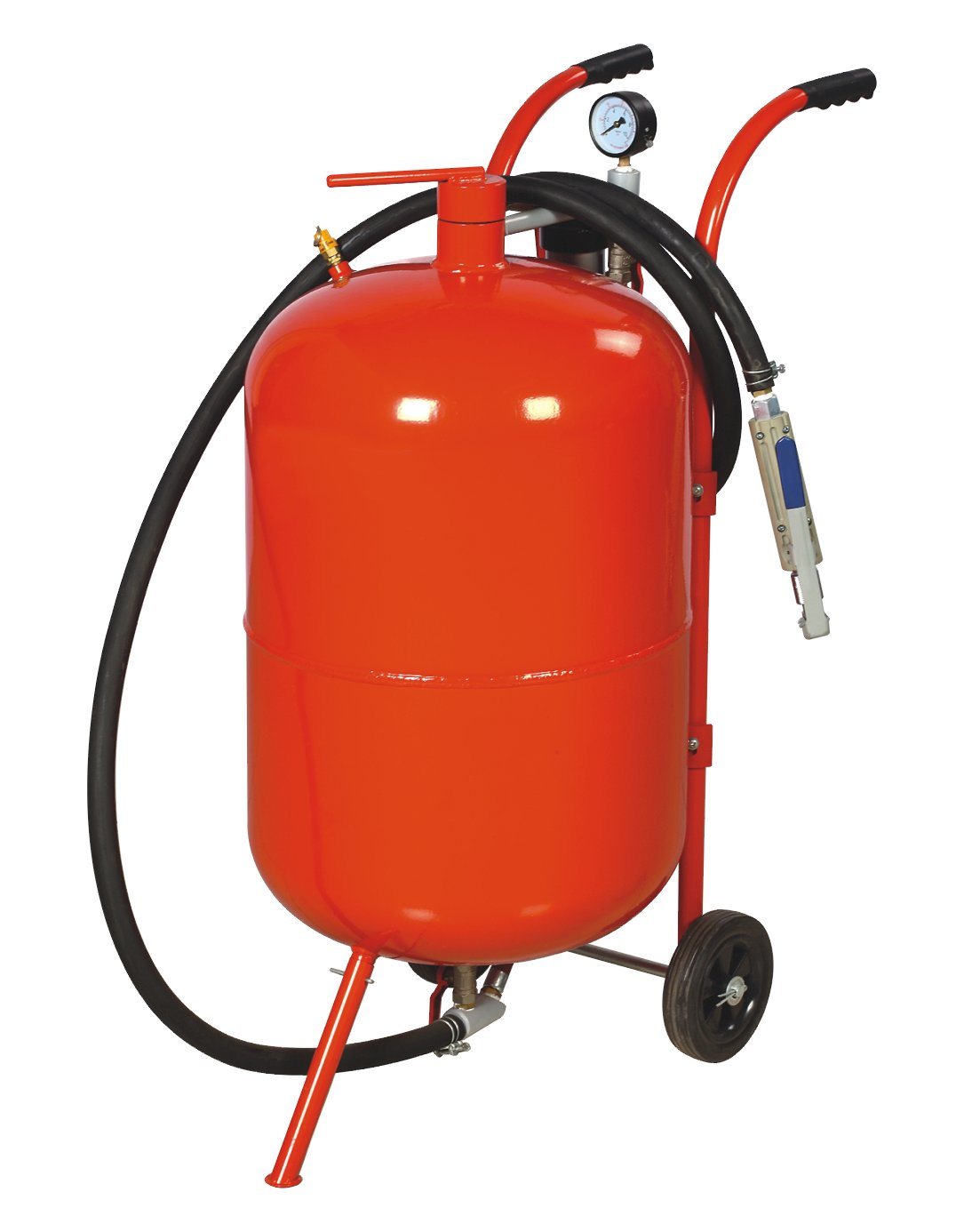
Selecting the right abrasive represents only half the battle. You must match the media to your machine hardware. Failing to align these factors causes immediate operational problems.
Specific gravity and mesh size dictate your minimum air requirements. Every media type demands different cubic feet per minute (CFM) volumes. Heavy steel grit requires massive air volume to stay suspended. Lightweight organics need significantly less air. Undersizing the air compressor remains the most common point of failure. It leads to severe pressure drops at the nozzle. Inconsistent surface finishes inevitably follow.
Nozzle sizing requires basic math. The nozzle orifice must measure at least three to four times larger than your largest abrasive particle. If you ignore this rule, the nozzle will clog constantly. Furthermore, abrasive wear rates dictate your nozzle material. Tungsten carbide works well for standard media types. However, aggressive materials like aluminum oxide destroy tungsten quickly. You must upgrade to boron carbide nozzles for hard abrasives.
Precise industrial sandblaster specifications must dictate your exact valve type. You cannot use a universal valve for all materials. Heavy metallic media demands robust abrasive metering valves. These handle the extreme weight and abrasive friction. Conversely, lightweight organics require specialized flat sand valves. Standard valves often choke on walnut shells. Proper valves prevent clogging and ensure smooth material flow.
Procurement teams often focus solely on the initial bag price. This strategy causes massive financial losses over time. You must evaluate media based on breakdown rates. Look closely at how many times a material recycles.
Calculate your true cost per square foot. Premium steel grit might cost significantly more per pound initially. However, it cycles through the system hundreds of times before turning to dust. Single-use coal slag costs very little upfront. Yet, it shatters upon impact and creates massive disposal volumes. The highly recyclable material yields exponentially lower operational expenses over a yearly production cycle. Always prioritize reusable abrasives when your application allows it.
High-recyclability media demands specific capital expenditures. You must invest in robust reclaim systems. These include pneumatic vacuums or mechanical floor sweeps. You must evaluate your production volume realistically. Determine if your daily throughput justifies the infrastructure investment. Small shops might stick to manual sweeping. Large-scale fabricators require automated mechanical floors.
Environmental compliance dictates modern surface preparation. Traditional silica sand creates severe respiratory hazards. Silicosis remains a deadly threat to workers. OSHA strictly enforces regulations regarding respirable crystalline silica. Modern procurement strategies must prioritize silica-free alternatives entirely. If you refuse to switch, prepare for massive safety expenses. Specialized HEPA filtration systems become mandatory. Positive pressure respirators cost significant money. Elaborate environmental containment structures require heavy capital investment.
Do not buy equipment based on a brochure. A credible industrial sandblaster supplier always offers sample processing. Demand a physical proof of concept. Send them your raw parts. Provide them with your desired coating specifications. Let them run tests in their facility. You must verify the media and equipment pairing works perfectly before purchase.
Off-the-shelf cabinets fail frequently in high-throughput applications. Oddly shaped parts also defeat standard equipment setups. You must evaluate vendors based on their engineering capabilities. Can they design a custom industrial sandblaster for your exact needs? Look for vendors offering automated tumbling features. Demand specialized blast guns tailored to blind holes. Ensure the integrated dust collection system matches your specific media's dust load.
Supply chain stability matters immensely for daily operations. Factor in abrasive media availability in your region. You also need steady access to high-wear replacement parts. Nozzles, hoses, and rubber cabinet liners degrade constantly under continuous use. An industrial sandblaster goes down completely without these spare parts. Choose a vendor who stocks consumables locally. Verify their shipping times for emergency replacement parts.
Selecting the right blast media requires systematic elimination. Do not guess what works best. Follow a logical shortlisting process to protect your parts and your bottom line.
Eliminate any media exceeding your substrate's damage threshold immediately.
Discard abrasive options exceeding your facility's current CFM capacity.
Narrow down your remaining choices based on strict regulatory compliance.
Base final procurement decisions on media recyclability and long-term cost efficiency.
Take concrete action today to improve your surface preparation operations. First, audit your current compressed air capacity. Measure your actual CFM delivery accurately. Second, define your exact target anchor profile based on coating requirements. Finally, request structured sample testing from potential equipment suppliers. Let the data drive your final equipment investment.
A: Yes, you can. However, switching between incompatible media requires thorough system cleanouts. Moving from heavy steel grit to delicate glass beads risks severe cross-contamination. Leftover grit will ruin soft parts instantly. Always purge hoses and hoppers completely.
A: The media fails to reach optimal terminal velocity. This results in severely degraded cutting power. You will experience increased media waste. Your parts will suffer from uneven, shallow surface profiles. Undersized air ruins production speeds.
A: No. Organic media like walnut shells generates highly combustible dust. Your equipment must feature explosion-proof lighting. You must also install appropriately rated dust collection systems. These modifications ensure you meet strict NFPA safety guidelines.