English
Views: 0 Author: Site Editor Publish Time: 2026-09-15 Origin: Site


Upgrading or standardizing industrial cleaning equipment across multiple facilities is a high-stakes capital expenditure. You are investing in long-term operational efficiency. It demands strategic planning rather than reactive buying decisions based on price alone. Outdated manual washing creates severe labor bottlenecks in everyday operations. Employees spend hours scrubbing metal instead of performing high-value maintenance tasks. Meanwhile, selecting the wrong automated system leads to damaged components, failed environmental compliance, and wasted floor space.
For procurement teams and operations managers, evaluating a new washer requires moving past marketing claims. You must focus on measurable technical metrics, chemical compatibility, and vendor reliability. This guide breaks down the essential criteria to ensure your next bulk equipment purchase delivers measurable operational improvements. You will learn exactly how to match mechanical specifications to your specific factory workflows.
Identify the primary bottleneck: Base your purchase on specific workflow constraints—whether it’s throughput volume, complex geometries (blind holes), or strict environmental compliance.
Match technology to application: Ultrasonic systems excel at precision; automated spray cabinets are superior for heavy degreasing.
Scrutinize the specifications: Pump pressure (PSI), flow rate (GPM), and weight capacity determine true operational limits.
Vet the partner: A credible parts cleaning machine supplier provides verifiable ROI models, transparent lead times, and guaranteed aftermarket support.
You cannot purchase the right equipment without understanding your current shortcomings. Purchasing a high-quality parts cleaning machine requires comprehensive planning. Start by auditing your current state. You need concrete baseline numbers to justify a bulk capital expenditure.
Conduct a thorough audit of your existing wash stations. Document the current labor hours your team spends on manual scrubbing. Calculate the specific chemical disposal expenses you incur monthly. Solvent removal fees add up quickly across multiple facilities. Finally, track your component rejection rates. Determine how often parts fail quality control due to residual grease. These baseline metrics provide a clear benchmark for improvement.
Analyze your daily production schedule. Determine if your operation requires batch processing or continuous inline processing. Batch processing utilizes cabinet or tub styles. It works perfectly for intermittent loads or end-of-shift wash downs. Conversely, continuous inline processing relies on conveyor systems. Conveyor units fit high-volume, automated manufacturing perfectly. You must match the machine style to your actual factory cadence.
Best Practice: Always add a 20% buffer to your current volume estimates. Production growth will quickly overwhelm an undersized machine.
Catalog every substrate your facility handles. Aluminum, cast iron, and various plastics react differently to cleaning agents. Highly alkaline solutions can pit or etch soft aluminum surfaces. You must also identify your primary contaminants. Heavy greases, cutting fluids, and carbon buildup require distinct chemical treatments. This evaluation dictates whether you need an aqueous system or a solvent-based configuration.
Define your localized compliance requirements early in the process. OSHA and EPA standards heavily regulate industrial wash stations. You must control Volatile Organic Compound (VOC) emissions strictly. Wastewater discharge limits also require careful monitoring and filtration. Prioritize operator safety by minimizing exposure to harsh vapors. Failing regional compliance audits often results in severe financial penalties.
Common Mistake: Many buyers ignore municipal wastewater restrictions. They dump spent aqueous solutions directly into drains. Always verify local pH and heavy metal discharge limits.
Different contaminants and part geometries require entirely different mechanical forces. You must select the specific technology designed for your unique application.
These specialized units excel at absolute precision. They are best for complex geometries, delicate components, and blind holes. Ultrasonic technology uses high-frequency sound waves to create microscopic cavitation bubbles. These bubbles implode against the component surface, stripping away microscopic debris.
When evaluating these systems, look closely at the transducer frequency. Frequencies around 25-40 kHz create larger bubbles for aggressive scrubbing. Higher frequencies, like 80-130 kHz, provide gentle cleaning for fragile electronics or optics. You must also check power density, measured in watts per gallon. Higher density ensures consistent cavitation across the entire tank volume.
Spray cabinets function similarly to heavy-duty industrial dishwashers. They are best for heavy engine blocks, transmission cases, and bulk degreasing tasks. This represents the standard auto workshops parts cleaning machine format. Your primary goals here are severe labor reduction and high-pressure grime removal.
The combination of alkaline detergents, extreme heat, and mechanical spray strips away thick grime efficiently. Rotating turntables ensure the spray manifolds hit every exterior angle. However, line-of-sight spray cannot effectively clean deep internal passages or sharp blind holes.
Some components feature deep recesses and complicated internal channels. Agitation washers submerge the components entirely into the heated bath. A pneumatic or mechanical platform moves the load continuously up and down. This vigorous motion forces fluid through internal cavities. It loosens heavy particulate matter quickly. Facilities often pair mechanical agitation alongside ultrasonic transducers to achieve maximum effectiveness on complex blocks.
Technology Type | Primary Mechanism | Ideal Application | Key Limitation |
|---|---|---|---|
Ultrasonic | Acoustic cavitation bubbles | Delicate precision, blind holes | Slower processing, higher chemical sensitivity |
Automatic Spray | High-pressure heated jets | Heavy degreasing, large engine blocks | Line-of-sight limitation, misses deep cavities |
Agitation | Submersion and vertical motion | Internal channels, heavy particulate | Requires large fluid volumes, slower heat-up |
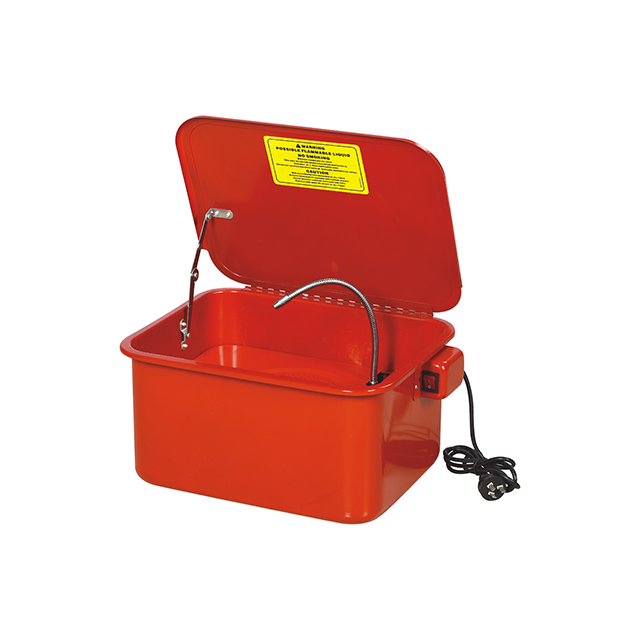
Marketing brochures often highlight aesthetic features. Procurement teams must ignore the polish and scrutinize the mechanical data. The physical numbers dictate real-world performance.
You must compare working internal dimensions (Width x Depth x Height) against the overall machine footprint. Factory floor space remains an expensive commodity. Ensure you have enough clearance for maintenance access doors and control panels.
Check loading heights for operator ergonomics. You do not want workers bending awkwardly repeatedly.
Verify overhead crane accessibility. Heavy engine blocks require clear vertical drop zones.
Assess the door swing radius. Clamshell doors require vertical clearance, while front-loading doors consume aisle space.
Every industrial unit has strict structural limits. Check the maximum turntable weight or the basket load limit. Exceeding these limits accelerates motor wear rapidly. It can also warp structural supports and damage drive gears. Always purchase a unit with a weight capacity at least 25% higher than your heaviest anticipated load.
These numerical figures dictate the actual cleaning power of a spray cabinet. You must evaluate parts cleaning machine specifications carefully to ensure adequate performance.
PSI (Pressure): This metric determines the physical impact of the liquid jet. High pressure cuts through baked-on carbon and thick grease effectively.
GPM (Flow Rate): Flow rate determines the sheer volume of fluid hitting the component. High flow volume flushes away loosened chips and contaminants quickly. Flow rate often matters more than pressure for complex geometries.
Look closely at the kilowatt (kW) rating of the immersion heating elements. Faster heat-up times reduce shift-start delays. Employees can begin washing parts sooner. However, higher kW ratings demand significantly higher electrical amperage. Verify your facility panel can safely handle the sustained electrical load before making a purchase.
Advanced filtration saves your facility money on chemical replacements. Check the micron ratings for particulate filter bags. Smaller micron ratings trap finer metallic debris. You should also look for integrated oil skimmers or coalescers. Removing floating tramp oil extends the bath life significantly. It ensures components emerge clean rather than coated in a thin oil residue.
Buyers often debate whether to purchase an off-the-shelf unit or commission a fully bespoke system. Both approaches carry distinct advantages and limitations.
Standard units offer significantly shorter lead times. You can often have them delivered and installed within weeks. They feature predictable, well-documented maintenance schedules. You also gain immediate access to readily available replacement components. These machines are ideal for standard automotive tasks. General manufacturing workflows also benefit immensely from standard configurations. They present a lower initial capital expenditure and require minimal operator training.
Sometimes standard catalogue units simply fall short. You may need a custom parts cleaning machine when facing specific industrial constraints. Triggers for bespoke customization include highly specialized component geometries that require precise nozzle targeting. You might also face non-standard footprint constraints in an older facility.
Multi-stage processes often mandate custom engineering. These processes sequentially wash, rinse, dry, and apply rust-inhibiting chemicals. Furthermore, integrating a washer into an automated robotic loading cell requires custom PLC programming and specialized indexing turntables.
Trade-offs: Custom builds require extended engineering lead times, often spanning several months. They demand a higher upfront capital investment. You might also rely heavily on proprietary replacement parts, which requires stocking critical spares locally.
The company behind the equipment matters just as much as the steel itself. You are entering a long-term operational partnership.
Do not trust glossy brochures alone. Ask the vendor if they offer formal pilot testing. A reliable engineering partner conducts lab analysis on your actual contaminated parts. They should prove their concept before proposing a final machine build. This empirical testing mitigates your purchasing risk entirely. They should provide a detailed lab report showing before-and-after cleanliness validation.
A heavy machine arriving on a flatbed truck is only half the battle. Clarify exactly who handles the complex site integration. Determine if the vendor manages the heavy electrical drops and plumbing connections. Ask about initial operator training sessions. Proper factory training prevents immediate operator errors and ensures the equipment runs at optimal efficiency from day one.
Industrial machinery will eventually require maintenance. Check for localized service technician availability. Review the specific warranty terms on critical moving components, such as high-pressure pumps and ultrasonic transducers. Ask for strict spare parts availability guarantees. A trustworthy parts cleaning machine supplier prioritizes your factory uptime and offers comprehensive Service Level Agreements.
Sourcing the right industrial washer requires careful, metric-driven alignment. You must align physical mechanical capabilities against chemical realities and daily workflow demands. Focusing purely on the initial sticker price often leads to undersized equipment that chokes production.
Actionable Next Steps:
Compile your current baseline metrics, including part dimensions, contaminant types, and daily throughput targets.
Audit your facility's electrical capacity and wastewater discharge permissions.
Require your shortlisted vendors to run a test batch of your worst-case components.
Demand proven cleanliness results before issuing a formal Request for Proposal (RFP).
A: Solvent cleaning relies on chemical dissolving action. It often involves high VOC emissions and faces strict disposal regulations. Aqueous cleaning relies on heated water, alkaline detergents, and mechanical force. Aqueous systems are safer, environmentally friendly, and generally easier to permit in modern industrial facilities.
A: Size the internal tank based on your absolute largest single component or your maximum desired batch size. Once you determine those dimensions, add a 20% spatial clearance. This clearance ensures proper fluid circulation around the parts and provides safer loading ergonomics for the operators.
A: Daily tasks include checking chemical concentration, emptying oil skimmers, and cleaning out particulate filter baskets. Monthly or annual tasks involve descaling the heating elements, inspecting high-pressure pump seals, and performing total bath changeouts to remove dissolved solids.
A: Yes, mechanically, the same machine works for both. However, the detergent chemistry must be carefully selected. Highly alkaline solutions that effectively clean heavy steel can quickly etch, pit, or degrade soft aluminum surfaces. You may need a specialized multi-metal detergent.