English
Views: 0 Author: Site Editor Publish Time: 2026-08-07 Origin: Site


Equipment sizing errors are costly—undersizing leads to cold joints and idle crews, while oversizing wastes capital and creates site mobility issues. For small-to-medium commercial projects, striking the right balance between batch capacity and portability is critical. You need equipment large enough to maintain production but compact enough to move freely. Navigating tight sites requires careful planning, and choosing the right mixer size dictates your daily rhythm.
This guide provides an objective framework to determine if the HCM130 concrete mixer aligns with your project’s output requirements, crew size, and operational logistics. We will explore essential specifications, ideal applications, and operational best practices. You will learn how to accurately match drum volume to hourly yield expectations. By understanding these parameters, you can optimize your site workflow and prevent bottlenecks.
A 130-liter drum volume does not equal a 130-liter yield; actual mixed output is typically 60-70% of drum capacity.
The HCM130 is optimal for decentralized site work, masonry, fence footings, and structural repairs, but not for monolithic slab pours.
Cycle time and logistics (loading/unloading) dictate true hourly production more than drum size alone.
Selecting the right customization options and a verified supplier ensures long-term ROI and compliance with site safety standards.
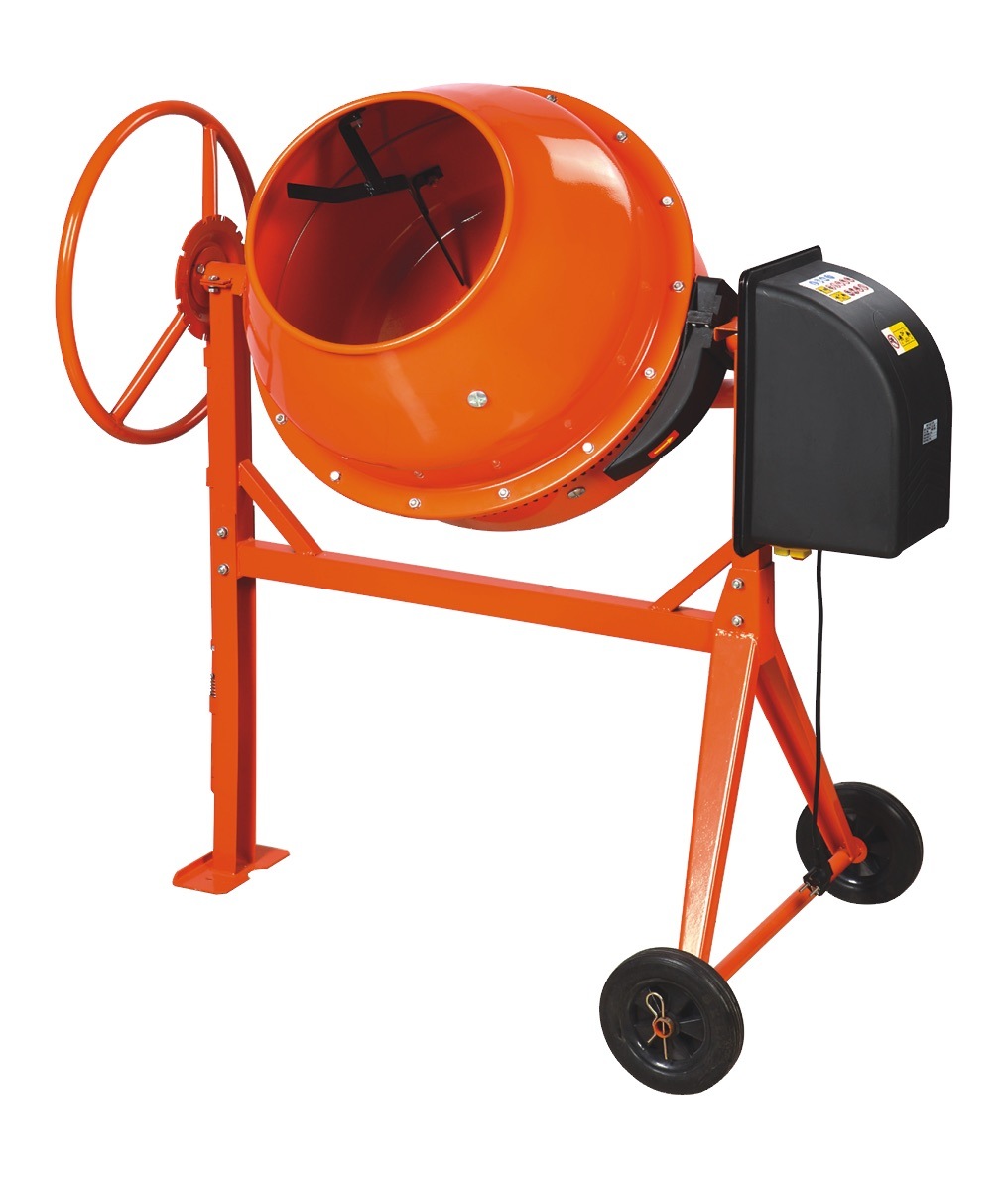
Many contractors miscalculate production because they confuse a mixer’s gross volume with its functional yield. You must understand this critical distinction to plan daily pours accurately. A 130L (approximately 4.6 cubic feet) gross capacity drum does not deliver 130L of wet concrete. The actual yield sits roughly between 80L and 90L (about 2.8 to 3.2 cubic feet) of workable concrete per batch.
Why does this difference exist? The drum operates at an angle. It needs empty space to tumble the aggregate effectively. If you overfill it, materials spill out the front, and the center fails to mix properly. Reviewing the HCM130 concrete mixer specifications helps you see this operational limit. When breaking down the math for site work, this wet yield equates to processing typically 1.5 to 2 standard 80lb bags of pre-mix per cycle. Limiting the load to this amount protects the motor from strain and ensures a uniform, lump-free consistency.
Drum size only tells half the story. Real production depends heavily on cycle times. A standard batch requires about 3 to 5 minutes of active mixing time to achieve full hydration. However, you must also account for human factors.
Loading: Shoveling sand, gravel, and cement or dumping pre-mix bags takes roughly 1 to 2 minutes.
Mixing: The drum spins for 3 to 5 minutes to homogenize the materials.
Discharging: Pouring the wet mix into a wheelbarrow takes about 1 minute.
This creates a realistic cycle time of 5 to 8 minutes per batch. Operating efficiently, a focused crew can turn over 7 to 10 batches per hour. This translates to roughly 20 to 32 cubic feet of concrete per hour. Relying on realistic hourly yields prevents you from falling behind schedule during critical phases.
The power source directly influences torque, site flexibility, and daily running expenses. Most standard units use electric motors ranging from 0.5 to 1 HP. Electric units deliver consistent torque and run quietly. They excel in residential zones or indoor commercial renovations where emissions are strictly prohibited. You simply plug them into a standard outlet or a portable generator.
Conversely, models equipped with small gas engines offer complete off-grid independence. They thrive on raw land developments or roadworks. However, gas engines introduce exhaust fumes, require fuel management, and demand regular oil checks. They also generate more noise, which might violate local ordinances in dense urban areas. Choose the drive mechanism based strictly on your typical site constraints and power availability.
Deploying this equipment correctly yields excellent returns on effort. It excels in applications demanding intermittent, fresh batches rather than continuous heavy volume. Masonry crews rely heavily on this size. Mortar and stucco preparation require precise, manageable quantities that do not dry out before application.
Landscaping and perimeter security teams also benefit significantly. When setting fence posts, bollards, or signpost footings, crews move constantly. A highly portable mixer matches this stop-and-go rhythm perfectly. Additionally, municipal repair teams favor this capacity for sidewalk repairs, small retaining walls, and localized slab patching. The drum provides just enough material to complete the repair without leaving excess waste on the street.
Knowing when to scale up is just as important as knowing when to deploy a compact unit. You should avoid using this size for large residential driveways or foundation footings for whole structures. Monolithic slab pours demand rapid, continuous material placement.
If your batching process is too slow, the previously poured section will begin to set before you can place the next batch against it. This creates cold joints. Cold joints compromise the structural integrity of the concrete and leave visible, ugly seams. If your project blueprint calls for continuous heavy volume, you must scale up to a larger towable unit or order ready-mix delivery.
Sometimes, site geography dictates strategy over sheer machine size. Consider the advantages of a construction work HCM130 concrete mixer deployment using two decentralized units rather than one centralized 350L mixer.
On a sprawling site, walking back and forth to a central mixing station causes extreme labor fatigue. Workers push heavy wheelbarrows hundreds of feet. By staging two compact units at opposite ends of the site, you drastically reduce travel distance. Workers mix closer to the actual placement zone. This strategy improves placement speed, keeps the crew energetic, and provides redundancy. If one mixer requires a quick clean-out, the other continues producing.
Assigning too many workers to a small machine wastes labor hours. Assigning too few causes burnout and slows production. The optimal crew size for a 130L mixer is typically one to two operators.
In a two-person setup, roles divide cleanly. One operator manages the loading and mixing phase. They measure the water, monitor the aggregate ratio, and ensure drum consistency. The second operator handles transport and placement. They position the wheelbarrow, receive the wet mix, navigate to the pour site, and trowel the material. This alternating rhythm allows continuous operation without either worker hitting a physical wall.
Poor material staging ruins daily productivity. You must design a layout that minimizes loader fatigue. We recommend establishing a U-shaped staging zone around the mixing station.
Place the sand pile on the operator’s dominant side.
Position the gravel or crushed stone directly opposite the sand.
Stack the cement bags on a raised pallet behind the operator to prevent excessive bending.
Keep a dedicated water barrel or hose within arm's reach.
By arranging materials close to the drum mouth, the operator simply pivots rather than walking to fetch each shovel load. This tight staging maximizes the machine's uptime and protects the operator's lower back.
The primary advantage of this equipment class lies in its footprint. Large tow-behind mixers get stuck at the curb. The 130L units fit where larger machines cannot.
They effortlessly navigate through standard 36-inch residential doorways. This makes them indispensable for indoor basement renovations or retail build-outs. Furthermore, their lightweight chassis allows crews to hoist them via service elevators or maneuver them through tight scaffolding environments. When you bring the mixer directly to the point of placement, you eliminate complex pumping setups and reduce clean-up time.
Not all drums survive the same environments. Standard stamped steel drums perform well for basic mortar, pre-mix bags, and smooth river rock. However, if your region utilizes highly abrasive aggregates—like crushed granite or sharp slag—standard steel wears down prematurely.
For aggressive materials, you should evaluate reinforced options. A custom HCM130 concrete mixer often features a thicker drum wall or reinforced interior mixing blades. Upgraded drum materials resist the scouring action of sharp stones. This prevents thinning at the base and extends the functional life of the mixing vessel significantly.
Tire selection impacts your daily setup speed more than you might realize. Manufacturers typically offer solid rubber or pneumatic tire options. Each serves a distinct terrain.
The following comparison chart outlines the key differences between transport wheel configurations to guide your selection process.
Tire Type | Best Terrain | Advantages | Disadvantages |
|---|---|---|---|
Solid Rubber | Finished concrete, asphalt, indoor floors | Puncture-proof, zero air pressure maintenance | Sinks easily into deep mud or soft topsoil |
Pneumatic (Air-Filled) | Muddy sites, gravel driveways, raw land | Wider footprint provides flotation over soft ground | Susceptible to flats from site nails and sharp debris |
Specialized sites demand specialized power setups. Standard 110V motors work perfectly for general North American residential tasks. However, commercial sites may require 220V modifications to handle voltage drops over long extension cords. Using the wrong voltage stresses the motor windings and leads to overheating.
Additionally, consider the environmental exposure. If you operate in heavy dust environments (like dry cutting masonry sites) or wet environments (like coastal sea-wall repairs), standard vented motors fail quickly. You should specify a custom motor enclosure with a high IP (Ingress Protection) rating. An IP55 or IP65 rated motor seals out harmful dust and resists low-pressure water jets during cleanup.
Procuring equipment is only the first step; keeping it running is the real challenge. The market is flooded with cheap, unbranded imports. These units often look identical to premium models but lack local aftermarket support. When a drive belt snaps or a drum bearing seizes, you need replacement parts immediately.
Partnering with a reliable HCM130 concrete mixer supplier guarantees access to exploded parts diagrams and inventory. Before purchasing, verify they stock common wear items like pulleys, belts, switch assemblies, and bearings. A stalled mixer stops the entire concrete crew. Excellent technical support ensures your downtime is measured in hours, not weeks.
A strong warranty reflects the manufacturer's confidence in their product. However, you must read the fine print. Standard warranties often cover the motor against manufacturing defects for one year. They rarely cover wear-and-tear parts like belts or drum blades.
Look for a commercial-grade guarantee that explicitly covers heavy daily use. Some budget warranties void themselves if they discover the machine was used for commercial contracting rather than DIY home projects. Ensure your supplier recognizes your business intent and provides commercial coverage.
Site safety inspectors will sideline non-compliant equipment immediately. Your supplier must provide machines meeting strict regional safety certifications.
Look for CE marks if operating in Europe, or UL listed electrical components in North America. Furthermore, check for OSHA compliant guards. The ring gear and pinion must have adequate shielding to prevent workers' clothing or fingers from catching in the teeth. A responsible supplier never cuts corners on mechanical shielding or emergency shut-off switches.
Choosing the right mixing equipment determines the pace and safety of your job site. You should buy the 130L capacity model if mobility, targeted small batches, and rapid deployment are your primary priorities. It excels at keeping masonry and repair crews supplied without taking up excessive space. However, you must scale up if your structural blueprints call for continuous, high-volume monolithic pours.
Take time to assess your exact needs before moving forward. Calculate your average daily pour volume. Map out your typical job site terrain to choose the correct tire and chassis setup. Finally, contact a qualified sales engineer to discuss your specific power requirements and confirm shipping logistics. Making an informed decision now guarantees smoother pours tomorrow.
A: It handles roughly 1.5 to 2 standard 80lb bags of pre-mix per cycle. While the drum volume is 130L, the realistic wet yield is 80-90L. Staying within this limit prevents drum spillage, ensures thorough mixing, and protects the electric motor from unnecessary strain.
A: Standard electric models require a regular 110V single-phase electrical outlet. They typically draw between 5 and 10 amps. If you are operating off-grid, a compact 2000W to 3000W portable generator easily provides enough running and starting wattage to power the motor seamlessly.
A: Yes. The compact dimensions and manageable weight make it ideal for pickup transport. Two workers can easily lift the unit into a standard truck bed. Once on site, the integrated wheels allow one person to roll it down ramps directly to the working zone.
A: Never strike the drum with a hammer to dislodge dried concrete. Instead, immediately after your final pour, toss a few shovels of coarse gravel and water into the drum. Let it spin for five minutes. This abrasive slurry scrubs the interior walls clean. Dump the slurry and rinse thoroughly.