English
Views: 0 Author: Site Editor Publish Time: 2026-09-22 Origin: Site


Purchasing a surface finishing unit is only a fraction of the overall setup. Improper installation leads to inadequate abrasive flow, severe pressure drops, and rapid media breakdown. Unplanned installations cause immediate bottlenecks in daily metal finishing workflows. They drive excessive consumable wear and introduce serious OSHA and NFPA compliance risks. This guide offers a step-by-step framework to evaluate your facility readiness accurately. You will discover how to select the right equipment parameters for your daily output needs. We will help you partner confidently to ensure an efficient, safe, and highly productive installation.
Air Volume Trumps Pressure: Consistent CFM is more critical than max PSI for uninterrupted metal finishing.
Sizing Requires Buffer Space: Your cabinet must accommodate your largest parts plus a 30% minimum clearance radius for the blast gun.
Standard vs. Custom: High-throughput or awkwardly shaped parts often make standard cabinets cost-prohibitive in labor; custom solutions may yield better ROI.
Supplier Vetting is Crucial: A credible supplier evaluates your existing air infrastructure before quoting a cabinet.
Many operators assume high pressure guarantees excellent finishing performance. This assumption is a primary cause of system failure. Continuous blasting requires matching your air compressor's cubic feet per minute (CFM) output to your chosen nozzle size. We measure this output at a specific operating pressure (PSI). You cannot rely solely on a large air storage tank. An undersized compressor constantly struggles to refill the tank during active blasting. It runs beyond its rated duty cycle. This overexertion causes severe overheating and premature pump failure.
Proper plumbing routes air efficiently from the compressor to the installation site. You must use rigid, hard-piping materials like black iron or copper.
Common Mistake: Never use PVC piping for compressed air lines. PVC becomes brittle under thermal cycling and presents a lethal shatter hazard.
Avoid running undersized flexible hoses over long distances. Small-diameter hoses create massive line friction. This friction causes severe pressure drops before the air even reaches your sandblast cabinet. You lose abrasive velocity and drastically increase process times.
Air compressors naturally generate heat and condensation. Moisture mitigation is critical for continuous production. You must install inline desiccant dryers and high-quality coalescing filters. Warm air holds moisture, which condenses as it travels through cooler facility pipes. Wet air entering the blast system causes abrasive media to clump together. Clumped media instantly clogs blast nozzles. It also causes uneven surface etching and ruins your final finish.
Verify compressor continuous CFM rating at 80-100 PSI.
Measure the total distance of pipe routing to calculate friction loss.
Install drop legs in air lines to capture initial condensation.
Place desiccant dryers as close to the blasting unit as possible.
Choosing the right physical dimensions prevents severe operational bottlenecks. We rely on a strict sizing rule of thumb. The internal dimensions must allow the operator to maneuver the blast gun fully around the largest target component. You need a minimum 30% clearance buffer around your largest part. Without this buffer, operators cannot achieve the necessary angles to clean blind corners. Parts rubbing against cabinet walls also risk damaging the enclosure lining.
Selecting the correct delivery method is another pivotal decision. You will typically choose between two primary operational systems.
Siphon (Suction) Systems: These units use a vacuum effect to pull abrasive into the blast gun. They work best for light production. They fit a lower budget and handle less aggressive metal finishing.
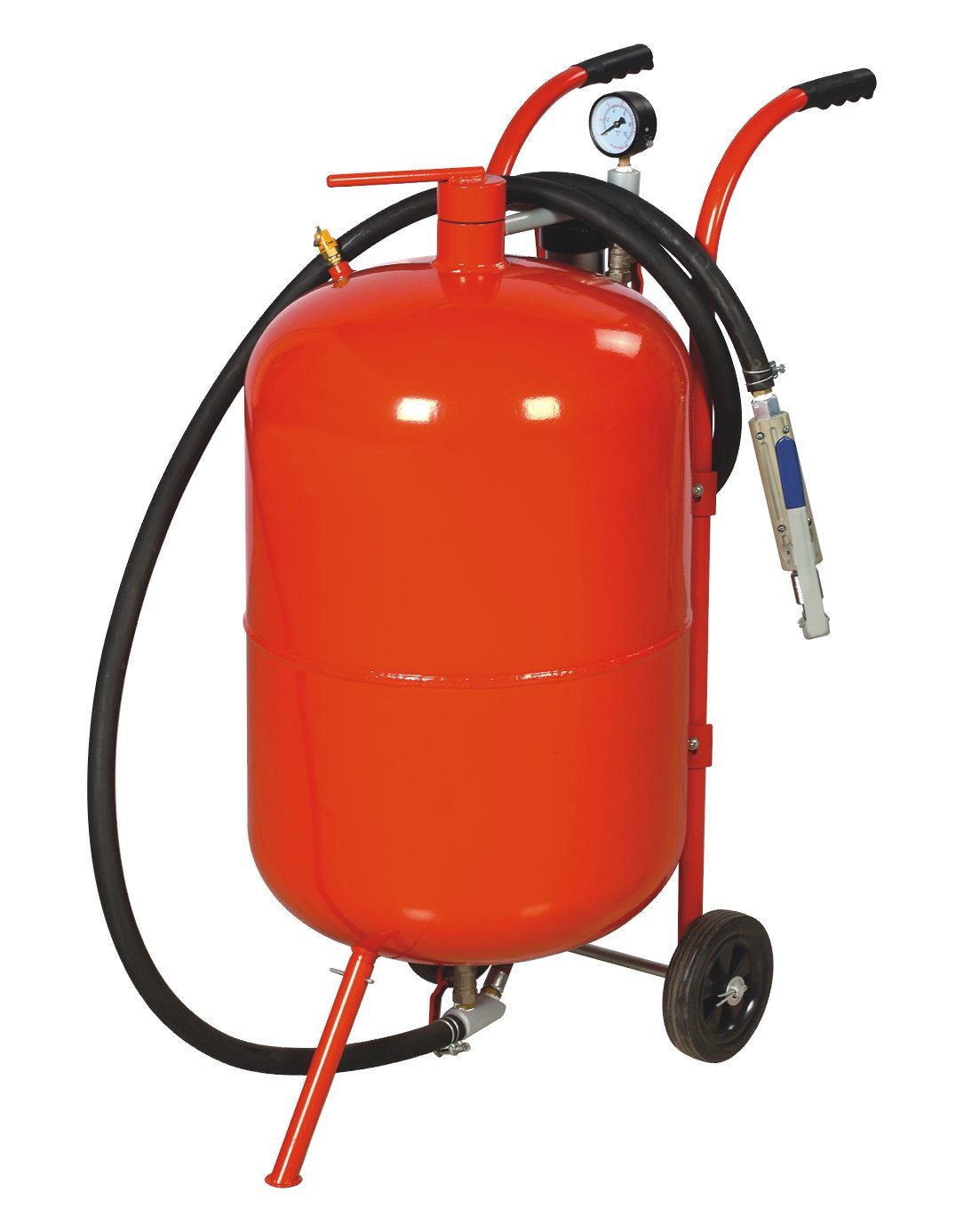
Direct Pressure Systems: These systems push media from a pressurized vessel directly into the hose. They are required for heavy mil-profile stripping. We use them for deep cleaning and maximizing abrasive velocity.
System Comparison Guide
System Type | Production Level | Abrasive Velocity | Ideal Applications |
|---|---|---|---|
Siphon (Suction) | Light to Medium | Moderate | General cleaning, light deburring, delicate parts |
Direct Pressure | Heavy duty | High (Up to 4x faster) | Coating removal, deep profiling, heavy scale |
Your chosen abrasive material heavily influences your internal sandblast cabinet specifications. You cannot put heavy steel grit into a standard enclosure designed for glass beads. Dense media requires heavy-duty conveyance hoses. It demands specialized media reclaimers designed specifically for high-weight particle separation. If you run aggressive aluminum oxide, you need boron carbide nozzles. Standard ceramic nozzles will wear out in mere hours. Choosing a dedicated metal finishing sandblast cabinet ensures your internal components survive aggressive daily wear.
Off-the-shelf units offer fast procurement, but they possess inherent limitations. Standard models usually feature rigid weight limits on the internal work grate. They come with restrictive door dimensions. Operators often struggle with manual part rotation on heavy components. These standard bottlenecks slow down high-volume production lines. Manual manipulation of heavy parts also increases the risk of workplace injuries.
Specific workflow scenarios often trigger the need for customized equipment. You might handle awkward pump housings or long aerospace shafts. In these cases, you need overhead crane integration. Custom roof slots allow cranes to lower heavy parts safely. Other high-volume shops require automated tumbling baskets. These baskets process hundreds of small fasteners simultaneously without manual intervention. Heavy industrial applications benefit immensely from track-mounted turntables. These carts roll heavy castings straight into the enclosure. Some facilities even require specific robotic gun manipulation for strict aerospace tolerances.
You must balance the upfront premium of custom builds against long-term labor savings. A specialized custom sandblast cabinet drastically accelerates part loading and unloading. It reduces operator fatigue. When operators spend less time wrestling with heavy parts, they spend more time actively blasting. The daily labor savings rapidly offset the initial engineering costs of a specialized build.
Operator visibility directly dictates your production speed. Inadequate negative pressure leaves dust hovering inside the enclosure. Poor cabinet visibility forces operators to slow down. They miss critical spots or over-blast delicate areas because they cannot see the surface. A properly sized dust collector pulls airborne particles away from the viewing window instantly. It maintains a clean visual field and ensures highly even surface profiles.
Efficient media reclaiming mechanisms save massive amounts of money. Cyclone separators act as the heart of this process. They use centrifugal force to spin the exiting air. Good, reusable abrasive is heavy. It falls back down into the storage hopper. Shattered dust and debris are light. The system pulls them up and out into the dust collector. High-quality systems feature a tunable reclaimer. You can adjust the internal baffles to perfectly match the specific weight of your abrasive.
Best Practice: Always tune your reclaimer when switching media types. A reclaimer tuned for heavy steel will accidentally discard lighter glass beads into the waste bin.
You must strictly adhere to safety and compliance standards. Metal dust poses severe combustion hazards. Facilities must follow OSHA and NFPA guidelines. You need HEPA filtration to trap microscopic particulates before they enter shop air. Proper electrical grounding requirements mitigate static buildup. Static sparks inside a dusty enclosure can trigger devastating combustible dust explosions. Never overlook certified grounding lugs on your dust collector and blast enclosure.
Choosing the right manufacturing partner determines your long-term success. A trustworthy supplier always uses a diagnostic approach. They evaluate your true needs before pushing a sale. A credible sandblast cabinet supplier will audit your current compressor specifications. They verify your electrical phase availability. They ask detailed questions about your primary finishing goals. If a vendor offers a quote without asking about your available CFM, you should find a new partner.
Aftermarket support is just as critical as the initial build quality. Blast equipment consumes wear parts regularly. You need reliable access to replacement nozzles, heavy-duty gloves, and protective window underlays. You also need replacement blast hoses. Evaluate the vendor's inventory levels. Long lead times on proprietary components will stall your production line completely. Standardized consumables keep your shop running smoothly.
Review the warranty and implementation guidance thoroughly. Look for transparent warranty terms. A good warranty covers the main cabinet shell, dust collector motors, and primary pneumatic valves. Ask about technical support during the physical installation phase. Your maintenance team will need expert guidance when connecting air lines and calibrating the abrasive metering valves.
A successful installation bridges the gap between your equipment capabilities and your facility infrastructure. Your layout must align perfectly with your air supply and dust management systems. Always finalize your maximum part dimensions first. Include the necessary buffer zones for comfortable operator movement.
Before initiating any purchases, audit your current compressor. Measure its actual continuous CFM rather than relying on assumed tank capacity. Upgrading your air supply later causes massive delays. We highly recommend consulting with an experienced applications engineer. They will help map out a specific layout and configure a system tailored exactly to your metal finishing requirements.
A: It heavily depends on the nozzle size you select. However, a standard 1/4" blast nozzle generally requires 40-50 CFM at 80 PSI for continuous, uninterrupted operation. Smaller nozzles require less air, but they cover a smaller surface area, slowing down your overall production speed.
A: It is highly discouraged for continuous industrial use. Single-stage compressors typically provide inadequate CFM. They suffer from rapid overheating risks when pushed beyond their duty cycle. Two-stage piston compressors or industrial rotary screw compressors are the standard for professional surface finishing applications.
A: You need a minimum of 36 inches around all access doors to allow safe part loading. You must also leave sufficient rear and side clearance. This space allows maintenance teams to safely empty dust collector hoppers, replace filters, and service the pneumatic air lines easily.
A: A reclaimer separates good, reusable abrasive from shattered waste via centrifugal force. It drops the good media back into the hopper for reuse. The dust collector sits downstream. It only catches and securely stores the un-reusable waste dust pulled from the reclaimer.