English
Views: 0 Author: Site Editor Publish Time: 2026-06-04 Origin: Site


Ever wondered how a concrete mixer really works behind that spinning drum? It may look simple, but inside, a controlled mechanical process turns raw materials into reliable concrete. For contractors, site managers, and DIY builders, understanding this process goes beyond curiosity. It directly affects mix quality, project speed, and long-term structural strength.
Many people treat a concrete mixer like a black box. They load materials, press start, and wait. But once you understand drum rotation, blade movement, and discharge flow, you work faster and waste less. In this guide, you’ll learn how a concrete mixer works, from internal mechanics to real-world operation, plus how to choose and use one with confidence.
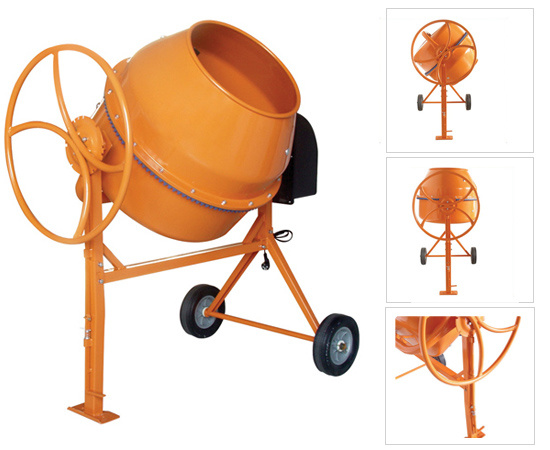
At its core, a concrete mixer follows one continuous cycle: load, rotate, blend, and discharge. Every model uses this same logic, even though sizes and designs vary.
Once materials enter the concrete mixer, the system moves into a continuous mechanical rhythm. Each rotation serves a specific purpose, gradually transforming loose ingredients into a cohesive concrete mix. Rather than relying on random motion, the mixer follows a clear and repeatable workflow.
At a glance, the core working flow of a concrete mixer looks like this:
● Materials enter the tilted drum
● Spiral blades lift and tumble the mix
● Cement paste coats aggregates evenly
● Continuous rotation prevents early setting
● Reverse rotation guides concrete to the chute
The blades do more than stir. They actively reshape the mix. Each rotation pulls heavier aggregates upward, then drops them through the wet cement matrix.
This folding action breaks dry pockets and redistributes water. Compared to simple spinning, it creates a far more uniform result. Over several minutes, layers disappear and the batch becomes one cohesive mass.
That is why blade shape and placement matter. Poor blade geometry leads to streaks, lumps, and uneven strength.
Most drums tilt around 60 degrees. This angle balances gravity and centrifugal force. It allows materials to climb the drum wall, then fall through the center.
Forward rotation keeps concrete circulating inside. Reverse rotation pushes it outward. Without this directional control, discharge would be slow and messy.
Small changes in angle or speed can change mix quality. Professional operators often adjust rotation time based on weather, material moisture, and batch size.
Loading order affects hydration and consistency. A common sequence looks like this:
1. Add part of the water
2. Load gravel or crushed stone
3. Introduce cement
4. Add sand
5. Finish with remaining water
This order reduces cement sticking to drum walls and helps water spread more evenly through the batch.
Once loaded, the mixer runs for several minutes. Rotation speed and time determine final texture. Short cycles leave dry zones. Long cycles can overwork the mix.
Experienced crews watch surface sheen and flow. When the batch looks smooth and moves as one body, it is usually ready.
Reversing the drum activates blade geometry in the opposite direction. Concrete travels along the spiral path and exits through the chute.
Operators guide flow into wheelbarrows, forms, or pumps. Controlled discharge reduces spills and keeps job sites cleaner.
Tip: For repeat pours, keep drum rotation slow between batches. It helps prevent residue buildup and saves cleaning time.
Every concrete mixer relies on several core parts working together. Understanding them helps diagnose issues and choose suitable models.
The drum holds materials and defines mixing volume. Its curved profile supports gravity-assisted blending. Inside, blades lift, fold, and redirect the mix.
Blade wear reduces efficiency. Over time, rounded edges fail to move aggregates properly, leading to uneven batches.
Electric motors suit indoor or residential jobs. They run quietly and need less maintenance. Gasoline engines offer mobility on remote sites where power access is limited.
Manufacturers like D&J, supplying concrete mixers globally since 2002, provide both electric and engine-powered options. This flexibility helps contractors match equipment to site conditions, especially in DIY and light commercial markets.
The transmission transfers torque from motor to drum. Belt, gear, or ring-drive systems convert rotation into steady mixing force.
A strong drive system matters when handling dense mixes. Weak transmission causes slipping and inconsistent blending.
The frame holds everything in alignment. Reinforced steel structures reduce vibration. Wheels allow repositioning across uneven ground.
Stable frames protect bearings and extend service life, especially during frequent transport.
Component | Primary Role |
Mixing Drum & Blades | Hold materials and fold the mix |
Motor / Engine | Drive drum rotation |
Transmission System | Transfer torque to the drum |
Frame & Wheels | Support structure and mobility |
Concrete mixers differ in size and mechanism, but they all follow the same mixing principle.
Drum mixers dominate job sites. They rely on rotating drums and gravity to move materials through the mixing cycle. You see them in portable units and transit trucks on daily construction work.
They handle most general-purpose concrete and suit small to medium projects, including residential pours and light commercial tasks.
These mixers use paddles to actively shear materials. Instead of gravity, blades push concrete through fixed paths for faster integration. They excel in stiff or specialty mixes where gravity alone struggles, especially when higher consistency is required.
Portable mixers serve repairs and home builds, offering flexibility on compact sites. Industrial systems process large volumes for infrastructure projects and continuous placement. Both use the same cycle. Scale changes output, not principle.
Ring drives suit lighter workloads and basic applications. Gear drives deliver higher torque for thicker mixes and demanding conditions. Choosing the right drive affects performance, durability, and reliability under heavy loads.
Here is a quick comparison of common concrete mixer types:
Mixer Type | Mixing Method | Typical Use |
Drum Mixer | Gravity rotation | General construction, DIY |
Forced-Action Mixer | Paddle shear | Dense or specialty mixes |
Portable Mixer | Compact drum | Repairs, home projects |
Industrial Mixer | Large-volume drum | Roads, bridges, slabs |
Understanding daily workflow helps crews operate more efficiently.
Measure materials before starting. Stage aggregates nearby. Confirm water supply.
Preparation reduces idle time and prevents rushed batching.
Start the motor. Let the drum reach steady speed. Then begin loading.
Avoid dumping all materials at once. Gradual feeding protects blades and improves early blending.
Watch how the mix moves. It should roll smoothly, not stick to walls or slump flat.
Adjust water in small increments. Large corrections risk weakening strength.
Reverse rotation slowly. Guide concrete through the chute.
Position forms first. Quick placement avoids segregation.
Tip: Many operators aim for three to five minutes of active mixing, depending on batch size and material moisture.
Mechanical mixing brings clear advantages over manual methods.
A concrete mixer completes batches in minutes, keeping work moving steadily across the site, even during continuous pours. Manual mixing can take much longer and demands heavy labor, especially on larger projects or time-sensitive jobs.
Faster cycles mean more pours per day, tighter schedules, and better overall workflow control.
Uniform blending improves curing behavior and material bonding across every batch. It reduces weak zones and surface cracking, even when conditions change on site.
Consistent mixes lead to predictable compressive strength and more reliable structural results over time.
Mixers remove repetitive lifting and shoveling, lowering daily fatigue for crews and helping prevent strain injuries. Workers can focus on placement, leveling, and finishing instead, improving both safety and productivity throughout the workday.
Benefit Area | Practical Impact |
Production Speed | Faster batch completion |
Mix Quality | More consistent strength |
Labor Effort | Reduced physical workload |
Brands such as D&J emphasize safety and productivity through features like lock pins and wheeled frames. These details reduce fatigue while maintaining stable mixing performance.
Selection starts by matching machine behavior to project needs.
Usable output usually equals two-thirds of drum volume. A 120-liter drum yields about 80 liters per batch under normal conditions. Small jobs suit compact mixers. Medium projects benefit from larger drums to reduce cycles and minimize downtime between pours.
Low power struggles with dense mixes. It causes uneven blending and operator frustration, especially during continuous operation. Aim for sufficient wattage or engine strength based on batch size, material weight, and daily workload.
Portable mixers move easily and fit tight spaces but produce less per cycle. Industrial units deliver volume and consistency but require stable placement and more setup time.
As a practical reference, D&J offers capacities from roughly 120L to 400L. This range helps buyers match concrete mixer size to DIY tasks or medium-scale construction.
Project Type | Suggested Drum Size | Typical Power |
DIY repairs | 120–160L | 600–800W |
Home builds | 160–250L | 700–1000W |
Light commercial | 250–400L | Engine or high-watt motor |
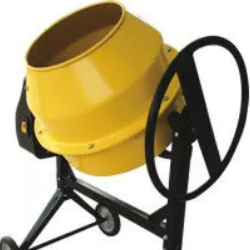
Concrete mixers serve different construction stages by adjusting batch size and mix ratios. From small residential tasks to large infrastructure pours, the same equipment adapts to varied workloads and material needs.
Application Type | Typical Projects | Mixer Role | Mix Style |
Residential & DIY | Foundations, walkways, fences, extensions | Small-batch concrete | Standard concrete |
Commercial & Infrastructure | Roads, bridges, slabs | Continuous supply during placement | High-volume concrete |
Specialty Mixing | Mortar, screed, custom aggregates | Ratio-adjusted blending | Custom recipes |
A concrete mixer creates consistent concrete through controlled drum rotation, angled geometry, and internal blades that lift and fold materials from loading to discharge, supporting even hydration and reliable strength. When you understand this process, you improve quality and productivity, choose better equipment, adjust mixing time wisely, and reduce on-site labor for both DIY and professional projects.
By focusing on core mechanics and practical operation, every batch becomes more reliable and every workflow smoother. Supported by D&J International ( H.K ) Limited, their concrete mixers deliver efficient performance, flexible power options, and durable design, helping customers complete projects faster and with confidence.
A: A concrete mixer rotates a tilted drum with internal blades that lift and tumble materials, blending cement, water, and aggregates into a consistent mix before reversing to discharge.
A: In a concrete mixer, the rotating drum and spiral blades perform the main mixing, while gravity helps spread moisture evenly through the batch.
A: The tilt allows a concrete mixer to use gravity for better blending, helping materials rise and fall so the mix stays smooth and uniform.
A: Most batches mix for about three to five minutes in a concrete mixer, depending on load size and moisture, until the texture looks even and workable.
A: A concrete mixer speeds up production, improves strength consistency, and reduces physical labor compared to manual mixing.
A: Check blade condition, drum speed, and loading order on your concrete mixer, since these factors directly affect mixing performance.